How to Pick Stocks for Swing Trading: A Rules-Based Method

You don't need a better tip. You need a method to select stocks for swing trading in India that you can run yourself, without waiting for someone else's conviction to show up in a chat window. That method has five parts: a bounded universe, a documented setup, a liquidity floor, entry/stop/target levels fixed before you look at the outcome, and a position size that keeps one bad trade from wrecking your month.
Key Takeaways
- The problem is not stock selection: it's the absence of a repeatable method to select with, which is why the same tip group can feel right ten times and wrong the eleventh.
- Five filters replace guesswork: universe, setup, liquidity floor, entry/stop/target, and position size, applied in that order, every time.
- Liquidity comes before conviction: a great-looking setup in a thin, low-volume name can trap you on the way out even if the entry was right.
- Sizing caps the damage: splitting capital across a fixed number of positions means no single trade can end your month.
- Rejecting every candidate is a valid output: most days, the correct answer from a real filter is to do nothing.
The Five-Filter Method at a Glance
| Filter | What it does | Why it matters |
|---|---|---|
| 1. Universe | Fixes a bounded, nameable list of stocks you actually screen | Stops "the whole market" from becoming an excuse to chase whatever trended today |
| 2. Setup | A single fixed rule with a documented, recomputable history | Replaces "this looks good" with "this rule has fired before, here is its record" |
| 3. Liquidity floor | A minimum daily volume or turnover threshold | Ensures you can actually enter and exit near the price you planned |
| 4. Entry/Stop/Target | Levels written down before you open the position | Removes the bias that creeps in once real money and a live P&L are involved |
| 5. Position size | A fixed capital split across your maximum number of open positions | Caps what any single trade can cost you, win or lose |
| Fallback rule | If a candidate fails any filter, it is dropped, no exceptions | Keeps the method honest instead of bending rules for a name you "like" |
9:47 PM, Another Telegram Screenshot
It's 9:47 PM on a Tuesday. You're scrolling a trading group on your phone after dinner, and someone has posted a screenshot with an arrow drawn on a chart and three words: "accumulate, target soon." No entry logic. No stop. No sample size. Just a picture and a promise. You've seen this exact message format a hundred times, from a hundred different names, and you still don't know how to check if it's right.
That's the actual problem. It was never about which stock the message named. It's that you have no rule to test the claim against, so every single tip requires a fresh act of faith. A trader who follows a hundred tips learns nothing repeatable from any of them, because the "why" behind each call lives in someone else's head, not in a rule you can write down and reuse.
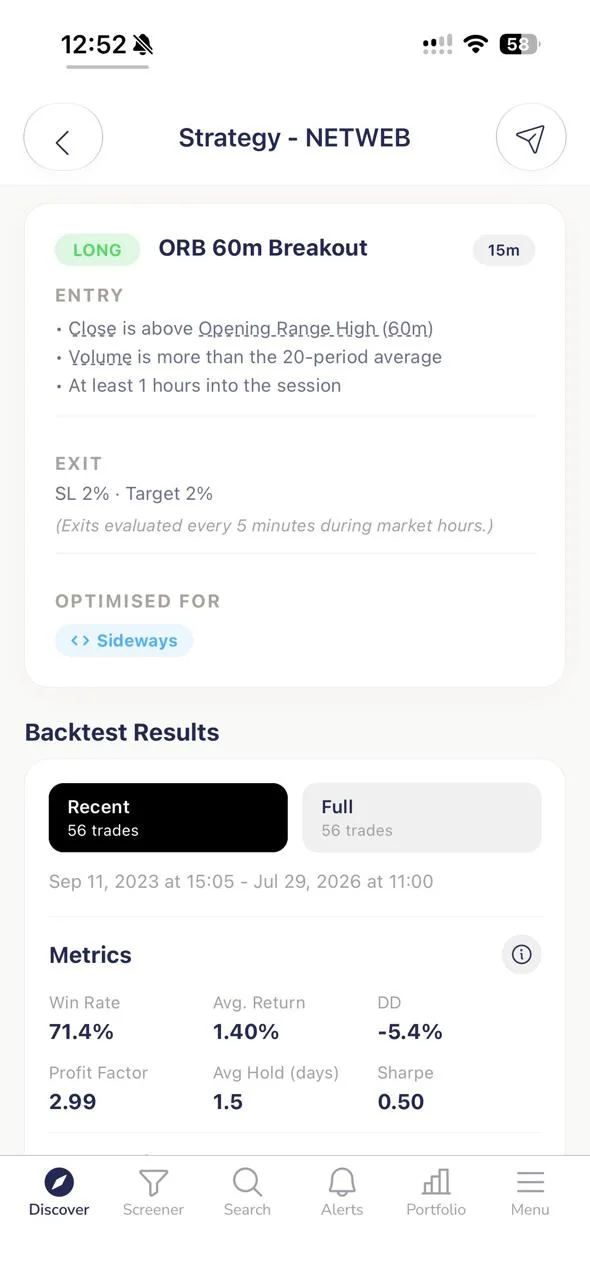
Compare that to a rule with a stated backtest record: an entry condition, a stop, a target, and a count of how many times it has actually played out. That kind of record can be recomputed by anyone who applies the same rule to the same data. A tip can't be recomputed. It can only be believed or ignored.
1. Define Your Universe Before You Look at a Single Chart
Start by naming the list of stocks you're actually going to screen. Not "the whole NSE," not "whatever's trending on FinTwit today." A bounded universe you could recite out loud if someone asked: your top holdings, a sector you follow closely, or a fixed list of liquid, well-covered names you check every week.
A salaried trader with maybe 30 to 45 minutes a day for markets cannot productively scan thousands of names. Widening the universe past what you can actually review each evening doesn't add opportunity, it adds noise, and noise is exactly what pushes people back toward tip groups in the first place, because scanning by hand feels impossible so someone else's shortlist starts to look attractive.
Keep the universe narrow enough that you can run it consistently, every single trading day, without it becoming a chore you skip. Consistency of process beats breadth of coverage for a part-time trader.
2. Pick One Setup With a Documented History
A setup is a fixed, statable rule, not a feeling about a chart. "Price closed above the 50-day moving average with rising volume" is a setup. "This looks strong to me" is not. The difference is that a setup can be run against historical data and produce a record: how many times did this exact condition occur, and how did price behave afterward.
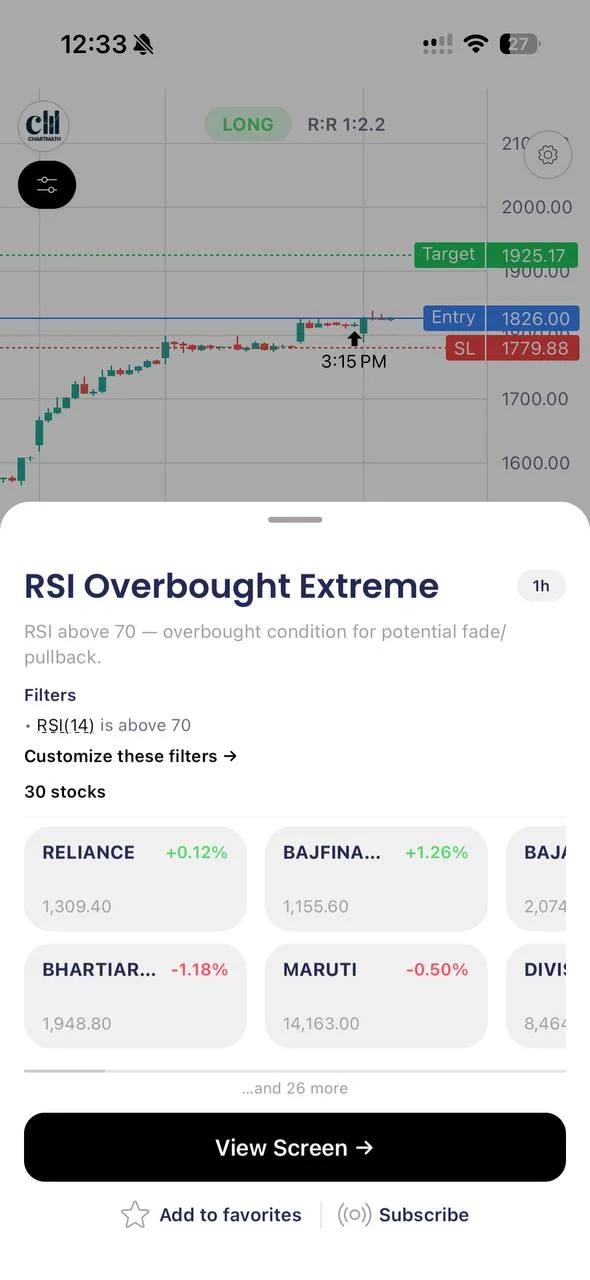
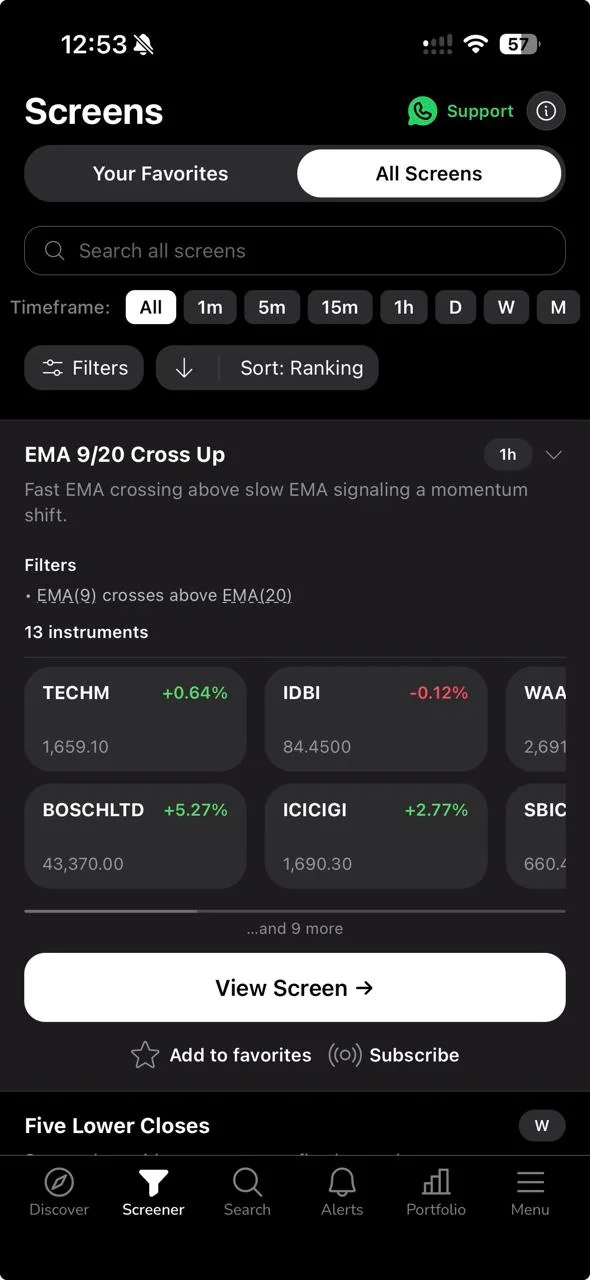
Two examples of the kind of rule worth building a method around: a consistent uptrend continuation screen that flags names holding a defined trend structure on the daily chart, and a 20-day consolidation breakout screen that flags names breaking out of a tight multi-week range. A third worth knowing is a 52-week high with volume confirmation screen, which pairs a price extreme with participation instead of trusting the price move alone.
What matters isn't which one you pick first. What matters is that you pick one, state its rule out loud, and hold yourself to trading only what that rule flags for a stretch of time long enough to judge it, rather than switching setups every week based on your last two trades.
This is also where a backtested win rate earns its keep. Chart-reading confidence is not the same thing as a documented record across dozens of historical instances. A screen's stated Win Rate and Avg. Return, computed the same way every time a stock matches, is the closest thing to a report card a rule can have. That's a structurally different question from "will this specific trade work," and it's the only question a rule can honestly answer.
3. Apply a Liquidity Floor
A setup can be technically correct and still be untradeable if the stock barely trades. Thin names widen the gap between your planned entry and your actual fill, and they can turn a clean stop-loss into a much worse exit if there simply isn't enough volume on the other side of your order.
Set a simple daily volume or turnover floor and apply it before you get attached to any name. A common approach: require a minimum average daily traded value over the last 20 sessions, high enough that your position size doesn't represent an outsized share of a normal day's volume. If a name fails the floor, it's out, no matter how good the setup looks on the chart. This single rule quietly eliminates a large share of the small-cap "hot tip" names that circulate in trading groups precisely because they're thin enough to move sharply on light volume, which is also what makes them dangerous to exit.
4. Write Entry, Stop, and Target Before You Look at P&L
The order of operations here is not negotiable: decide your entry price, your stop-loss, and your target before you place the trade, not after you're already sitting on an open position and watching it move. Once real money is on the line, the mind starts negotiating, "I'll give it a bit more room," "let's see if it comes back," and that negotiation is exactly how a small planned loss becomes a large unplanned one.
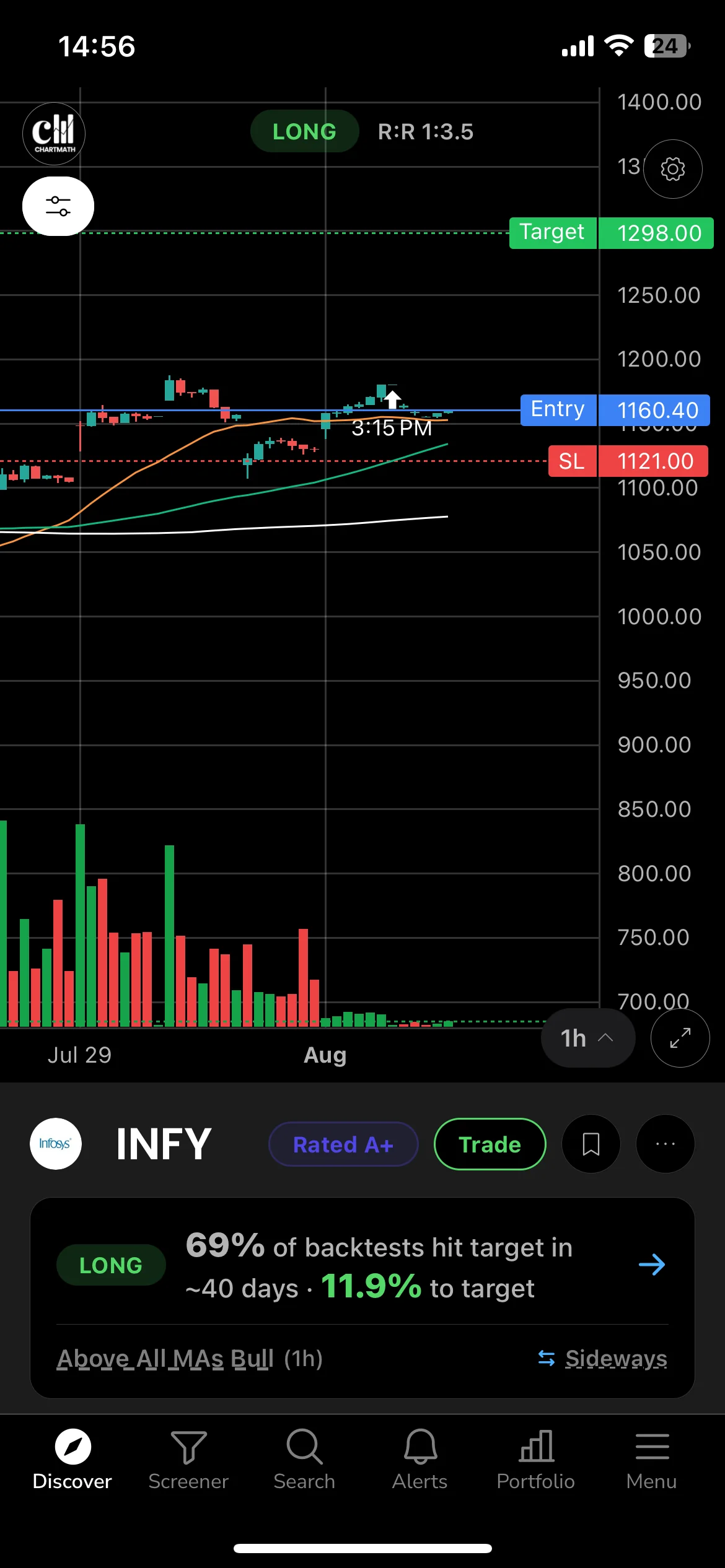
Write the three numbers down. A workable starting framework is a risk-reward ratio of at least 1:2, meaning your target distance is at least twice your stop distance, though the exact ratio should come from your chosen setup's own documented behavior rather than a number you picked because it sounded reasonable. None of this promises a specific outcome on any single trade; it just means you know exactly what you're risking and what you're aiming for before the position is live.
Rehearsing this sequence matters more than most traders think. Writing the entry, stop and target down before the position is live is what lets you check afterwards whether you actually followed your own levels under real-time pressure.
5. Size the Position So One Trade Cannot End Your Month
Position size is where most tip-following traders get hurt worst, because a tip usually arrives with a stock name and a price target, never a sizing rule. Without one, the natural instinct is to size up on the trades you feel most confident about, which are usually the trades where a tip made you feel certain, not the trades where your own filter actually held.
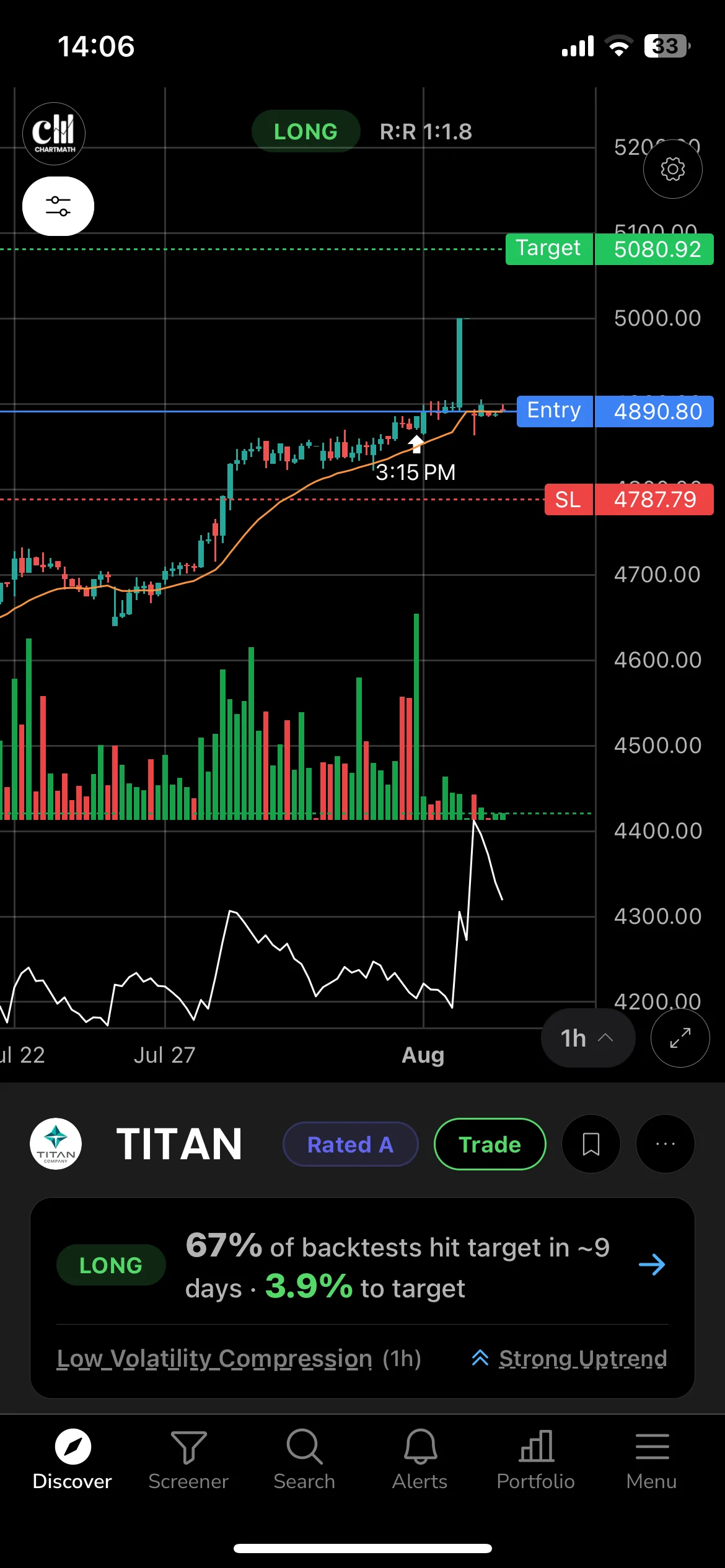
A simple, durable approach: split your trading capital across a fixed maximum number of open positions and never exceed that split for any single name, regardless of how strong the setup looks. If you run five positions max and one bets 40% of your capital on a single name, that one trade can decide your month before the other four even matter. Cap it structurally instead of relying on willpower in the moment.
This is also where writing the plan down earns its place in the method, not as bookkeeping but as rehearsal. Sizing every position by the same rule, and recording it, lets you see how your capital split behaves across a run of trades instead of one at a time. It's a copilot step, not an autopilot one: you're still the one deciding to place every order, the tool just keeps the sizing and levels honest.
Worked Example: Running the Five Filters on One Setup
Here's how the five filters chain together in practice, using a hypothetical name to show the process, not a real recommendation. Call it Stock X, a mid-cap industrial name on your watchlist.
- Universe: Stock X sits inside your defined list of 40 names you track weekly, so it clears the first filter.
- Setup: Stock X matches a documented 20-day consolidation breakout rule, closing above its range high with volume above its 20-day average. The rule has a stated historical record you can check.
- Liquidity floor: Stock X's 20-day average traded value comfortably clears your minimum threshold, so an exit at your stop shouldn't be a scramble.
- Entry/Stop/Target: You write down the breakout close as your entry, a stop below the range low, and a target sized to keep at least a 1:2 risk-reward, before placing anything.
- Position size: Your capital split across a maximum of five open positions caps this trade at one-fifth of deployed capital, regardless of how good it looks.
Only when all five steps clear does Stock X become a trade. If it fails at step three, it never reaches step four, no matter how convincing the chart looked.
When Nothing Qualifies, That's the Answer
On most days, a genuine filter should reject every single candidate in your universe. That's not the method failing, that's the method working exactly as intended. Tip groups never say "no trade today," because a channel with nothing to post loses engagement. A rule-based filter has no such incentive; it simply reports what matches and what doesn't.
Sitting in cash on a day when nothing clears all five filters is a legitimate output of a systematic process, not a sign you're missing something. The discomfort of doing nothing is exactly the discomfort a tip group is built to relieve, by always having a name for you. Getting comfortable with "no trade today" is a large part of what separates a rules-based trader from someone still waiting on the next screenshot.
Why the Tip-Group Loop Can Never Make You Systematic
This isn't an argument that every tip is wrong. It's an argument that even a correct tip teaches you nothing repeatable, because the rule behind it never becomes yours. You can follow a call that works, feel good about it, and be no closer to being able to make that same call yourself next month, because you never learned the "why," only the "what."
Nine in ten retail traders lose money the same broad way: no defined universe, no documented setup, no liquidity check, no written levels, no sizing discipline, just a stream of external decisions they didn't make and can't reproduce. That loop keeps you dependent on the next tip showing up on time. A five-filter method built from your own rules is the only way to stop needing someone else's conviction before you can act.
To be clear, this argument is about the method, not about any particular tip channel, YouTube personality, or app. The critique holds regardless of who's sending the message, because the structural problem, no rule, no record, no repeatability, is the same no matter the source.
Recap and Regulatory Note
Five filters, applied in order, every time: a bounded universe you can name, a setup with a documented history, a liquidity floor that guarantees you can exit, entry/stop/target levels written before you look at the P&L, and a position size that keeps any one trade from deciding your month. Run those five in sequence and you'll reject far more candidates than you accept, which is the point.
If you want to see how a documented setup's rule and historical record actually looks before you build your own filter around it, the screen pages show the underlying logic and backtested record for setups like the ones referenced above. Those pages run the US universe; for NSE names, switch the market to India inside the app. You can also see how the full workflow, from screen to alert to your own order, fits together by taking a look through the product demo, or start applying your own five-filter method with the ChartMath app, free with no credit card required, on iOS and Android.
For more on separating a documented setup's track record from noise, see why high win rate doesn't equal profitable trading, and for building the review habit that keeps a method honest over time, see how to run a weekly trading review in 20 minutes. If you're still deciding which screener to build this method around, this guide to choosing a stock screener for NSE swing traders covers what to check before you commit.
Educational use only. Not a broker/dealer or investment adviser and not registered with SEBI. Past performance does not indicate future results.
Nothing in this article is a recommendation to buy or sell any specific security. It describes a method for building and applying your own selection process; the decision, and the responsibility for it, stays with you.

See these setups live in ChartMath
200+ curated screens with backtest data. Free. No credit card required.