7 Paper Trading Mistakes That Follow Into Live Trading
A trader opens a simulator on Sunday night, sizes a position at 40% of the account because "it's not real anyway," skips the stop because a fake loss doesn't sting, and closes the app without writing anything down. Three weeks later, the same trader funds a live account and does the exact same thing, except now the loss is real. This isn't a rare story. It's the default outcome of paper trading mistakes that never get corrected because nobody treats the simulator like it matters.
Paper trading has a good reputation for a reason. It lets you test a setup, learn a platform, and build confidence before risking capital. But the reputation only holds if the practice is done right. Done wrong, paper trading doesn't just fail to prepare you. It actively trains the habits that will cost you money the moment real dollars are on the line. Your brain doesn't file "practice" and "the real thing" into separate folders. It just remembers what you did last time, and does it again.
Why Paper Trading Fails Most Traders (It's Not the Concept, It's the Execution)
The idea behind simulated trading is simple: rehearse the process until it's automatic, then apply it with real money. That only works if the rehearsal matches the real thing. A pilot who practices in a flight simulator without checklists doesn't build good habits, they build a version of flying that skips the checklist. Trading works the same way.
Most retail traders don't fail at paper trading because the concept is broken. They fail because they run the simulator like a video game and the live account like a job, when it should be the reverse. Every shortcut taken in the sim, no rule, no stop, no record, gets encoded as "how I trade." When real capital shows up, that encoding doesn't disappear. It executes.
Below are the seven mistakes that do the most damage, why each one builds a bad habit instead of a good one, and the specific fix for each. The fixes share one thread: make the simulation identical to your live process, not a looser version of it.
1. Treating It as a Game Because Nothing Is at Stake
This is the root mistake, and the other six mostly grow out of it. When nothing real is on the line, there's no friction stopping you from clicking buy on a whim. You see a green candle, you feel a pull, you enter. No setup, no rule, just a reaction. It feels harmless because the account is fake.
The habit this builds is impulsive entry with no rule attached to it. You're training your hands to click without your brain checking a condition first. That habit doesn't stay in the sandbox. It shows up live as chasing a green candle on a real ticker with real money behind it, and it's one of the fastest ways to bleed an account through a hundred small, undisciplined entries.
The fix is to pick one rule-based setup and only take trades that match it, in the sim, exactly as you'd need to in a live account. If you're testing a VWAP reclaim or an opening range breakout, the rule for entry needs to be written down before you open the chart, not decided in the moment. If you want a primer on reading a setup correctly before you act on it, this piece on how to read a trading signal before you risk money walks through the checklist a real rule should include. A backtested screen that only surfaces tickers matching a specific, defined pattern removes the guesswork that turns practice into gambling.
2. Oversizing Positions You'd Never Take Live
Simulated accounts make it painfully easy to size a position you'd never touch with real money. Ten thousand shares of a $40 stock feels the same as ten shares when the balance is imaginary. So traders size up, sometimes 10x or 20x their real risk tolerance, because there's no consequence attached to the number. Here's the problem: every result from that oversized trade is fiction. A 3% move on a wildly oversized position looks like a huge win or a huge loss, neither of which tells you anything about whether the setup itself has an edge. You've turned a test of a trading idea into a test of nothing.
The habit this builds is a distorted sense of what a normal position even feels like. When you finally go live and size correctly, the position feels too small to matter, so the temptation is to size up again, this time with real money attached. That's how accounts get wiped in a handful of trades.
The fix is mechanical: size every simulated trade using the same account risk percentage you'd use live, typically 1% to 2% of account equity per trade. Decide the dollar risk first, then work backward to a share count based on your stop distance. If sizing discipline is a gap in your process, the breakdown in how to build an efficient trading workflow in 2026 covers where position sizing fits into a repeatable routine, not a one-off decision made trade by trade.
3. Trading Without a Stop Because a Sim Loss Doesn't Hurt
A simulated loss doesn't register the way a real one does. There's no dent in your actual bank balance, so the incentive to cap a losing trade quietly disappears. Traders let sim positions run, hoping for a reversal that a real stop would have prevented them from waiting on.
The habit this builds is comfort holding losers and hoping instead of cutting. That habit is one of the most expensive things you can carry into live trading. A stock that gaps against you overnight doesn't care that you "were going to get out eventually." Without a hard stop as a rule rather than a mental note, a single bad overnight gap can undo weeks of gains.
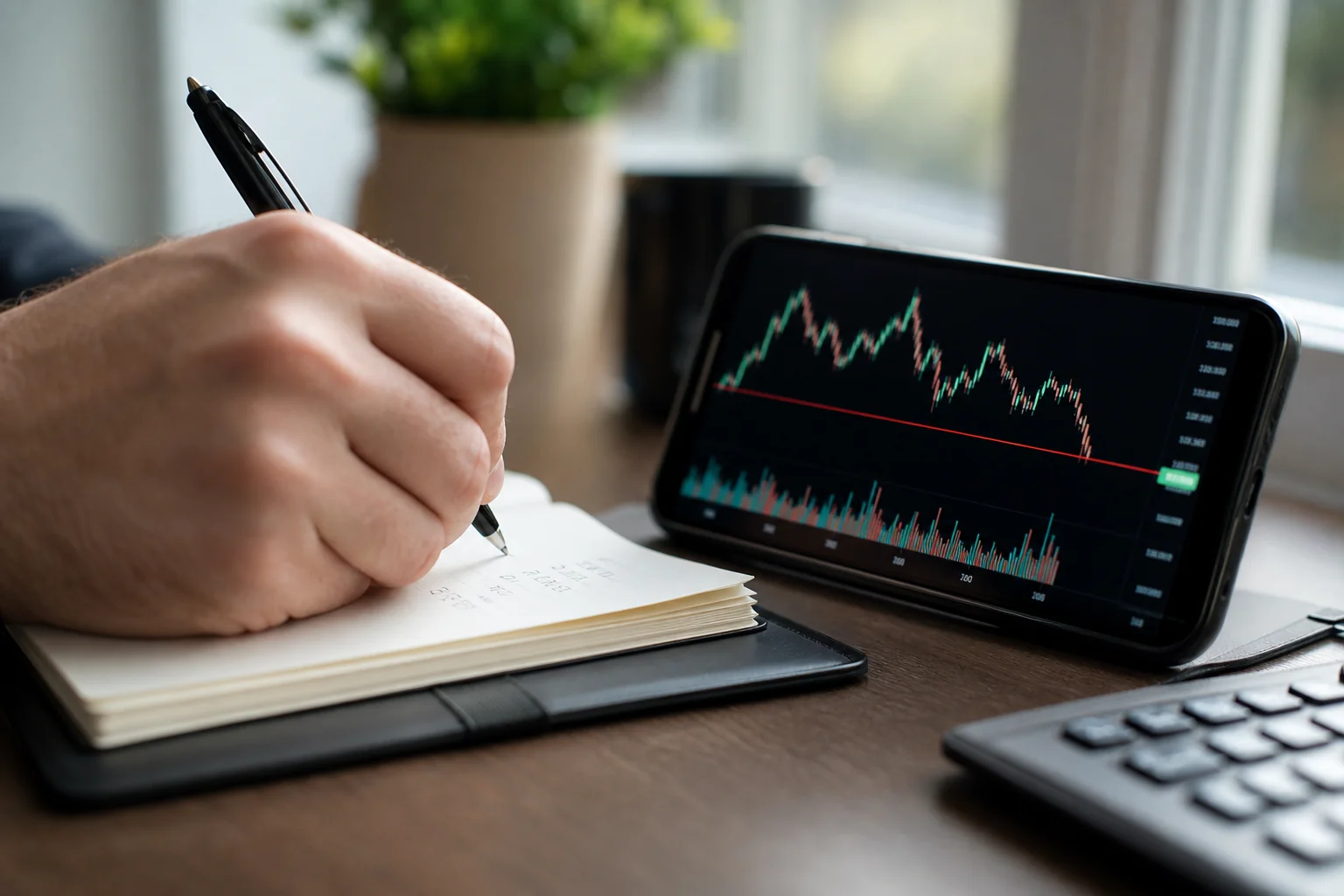
The fix is absolute: define your stop and target before you enter, every single time, with no exceptions for "this one feels different." Write the number down or set it as a hard order in the platform, not a level you'll "watch closely." If you want to see how a validated setup pairs entries with a defined stop and target from the start, how to validate a swing trade setup before you risk capital walks through the process of confirming a trade is worth taking, and where the risk boundary belongs in that decision.
4. Skipping the Journal, So Nothing Is Learnable
Twenty trades without a record teach you nothing, whether they happened in a sim or a live account. Most traders skip journaling in paper trading because it "doesn't count yet." That thinking is backward. The sim is exactly when you should be building the record-keeping habit, because it's low stakes and repeatable.
Without a log, there's no feedback loop. You can't tell whether your losses cluster around a specific time of day, a specific setup, or a specific mistake like entering too early. You just repeat the same errors, trade after trade, because you have no evidence pointing at what's actually going wrong.
The fix is simple and non-negotiable: log the setup name, entry price, stop, target, position size, and outcome for every single trade, sim or live. Ten minutes at the end of each session is enough. This record is what makes a weekly review possible instead of a vague feeling about how the week went. The process outlined in how to run a weekly trading review in 20 minutes shows exactly what a useful log turns into once you have a batch of trades to look back on.
5. Overtrading Every Twitch Instead of Your Actual Setup
Simulated trading removes friction. There's no commission pinch, no real capital tied up, so it's tempting to click into anything that moves. A stock wiggles near a moving average that sort of looks like your setup, and you take it anyway, even though it doesn't actually meet the rule.
The habit this builds is an itchy trigger finger and poor patience. You start trading adjacent noise instead of waiting for your actual, defined setup to fire. That's a low signal-to-noise habit, and it transfers directly into live trading as overtrading, more commissions, more decisions, and a diluted edge because half your trades never matched your rule in the first place.
The fix is to only enter when the specific, pre-defined setup actually fires, and to build in a mechanism that filters out everything else. This is exactly what a rules-based alert system is for: it tells you when your actual condition is met, not when something merely resembles it. The piece on watchlist alerts for swing trades that fire at the right time covers how to structure alerts so you're reacting to your rule, not to every candle that catches your eye.
6. Mistaking a Short Win Streak for Skill
Five sim trades in a row go your way and it feels like proof. It isn't. A five-trade sample tells you almost nothing about whether a setup has a real statistical edge. Randomness alone can produce a win streak that length on a coin flip. But it feels like validation, and that feeling is dangerous.
The habit this builds is overconfidence after a small hot streak, which shows up live as sizing up right before the setup's actual win rate reasserts itself. Traders who mistake a short streak for skill tend to increase risk exactly when they should be staying disciplined, and the reversal that follows can wipe out several winning trades' worth of gains in one move.

The fix is to judge a setup by a large enough sample, not a handful of trades. This is the same logic behind backtesting: a setup's real win rate only becomes meaningful once you've seen it play out across dozens or hundreds of historical instances, not five recent ones. For a deeper look at how sample size should shape your confidence in a setup, how to build winning backtesting strategies covers why a handful of trades, sim or live, is never enough to draw a conclusion from.
7. Never Defining What "Ready" Means
Without a finish line, paper trading turns into indefinite procrastination. Some traders sim trade for months without ever setting a threshold for when they'll actually go live. It feels productive, like diligent preparation, but it's often avoidance wearing a disguise. There's always one more thing to test, one more week to "make sure." The habit this builds is a permanent delay of the moment that actually matters: putting real capital behind a validated process. Some traders never cross that line, and the ones who eventually do often jump in impulsively, frustrated with the wait, which undoes the discipline they spent months supposedly building.
The fix is to set a concrete threshold before you start. For example: 30 trades on one specific setup, with the process followed correctly (rule matched, stop set before entry, size correct, trade logged) on every single one. Once you hit that number, you review the batch and make a real decision: go live, or refine the setup and run another batch. The threshold has to be decided in advance, not adjusted after the fact to justify more delay.
The Through-Line Fix: Make Your Sim Identical to Your Live Process
Every one of these seven mistakes comes back to the same root cause: treating the simulator as a lower-stakes version of trading instead of an identical rehearsal of it. The fix that solves all seven at once is straightforward, if not always easy to stick to:
- One rule-based setup you can define in a sentence, not a vague feeling about a chart
- Stop and position size decided before entry, every time, no exceptions
- Every trade recorded, including the ones you're tempted to skip logging because they were small
- A weekly review of the batch, not a daily gut-check on whether today felt good
This is the difference between practicing trading and practicing wishful thinking. A simulator that lets you skip stops, size randomly, and skip the journal isn't preparing you for anything. It's just letting you rehearse the exact behaviors you're trying to unlearn.
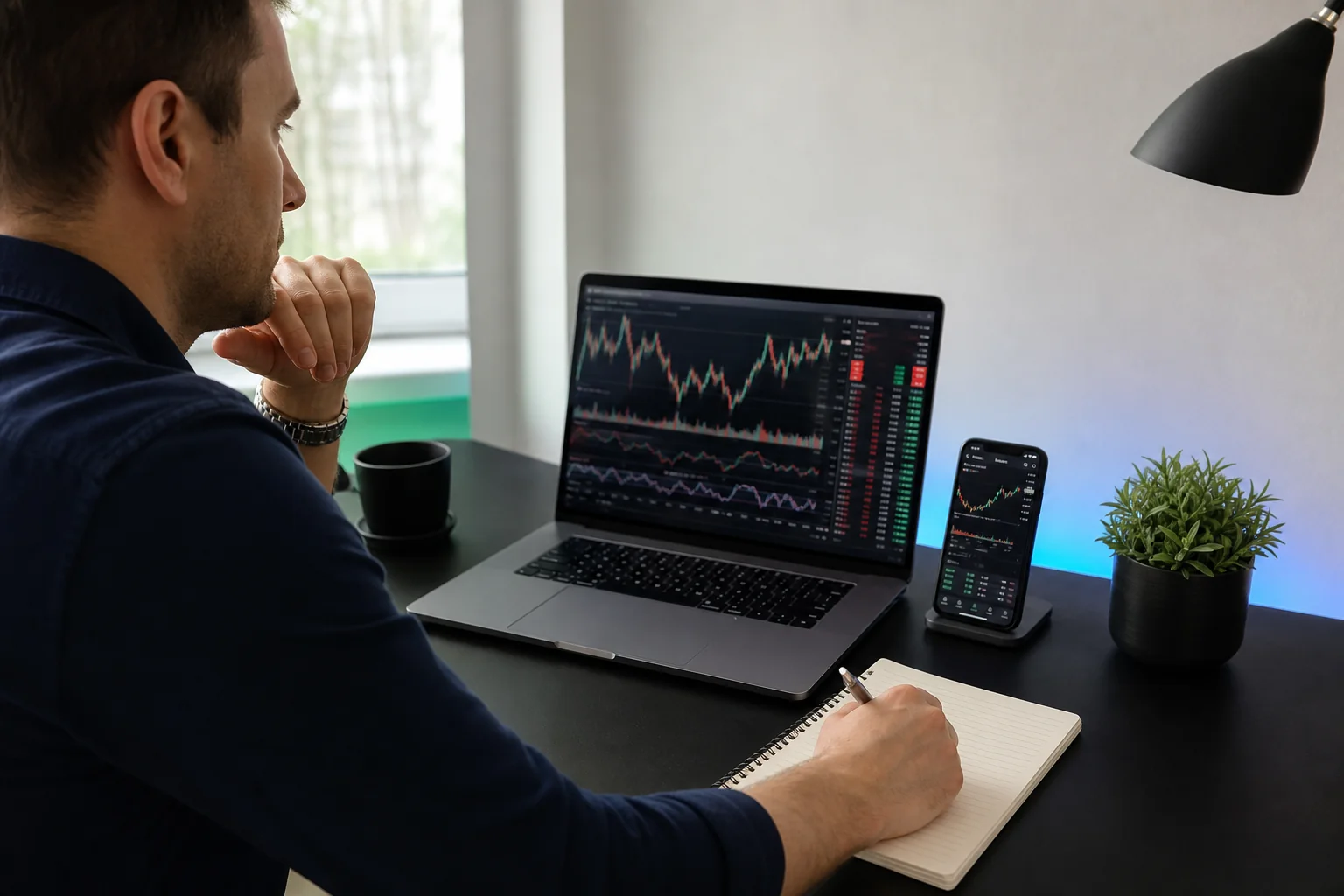
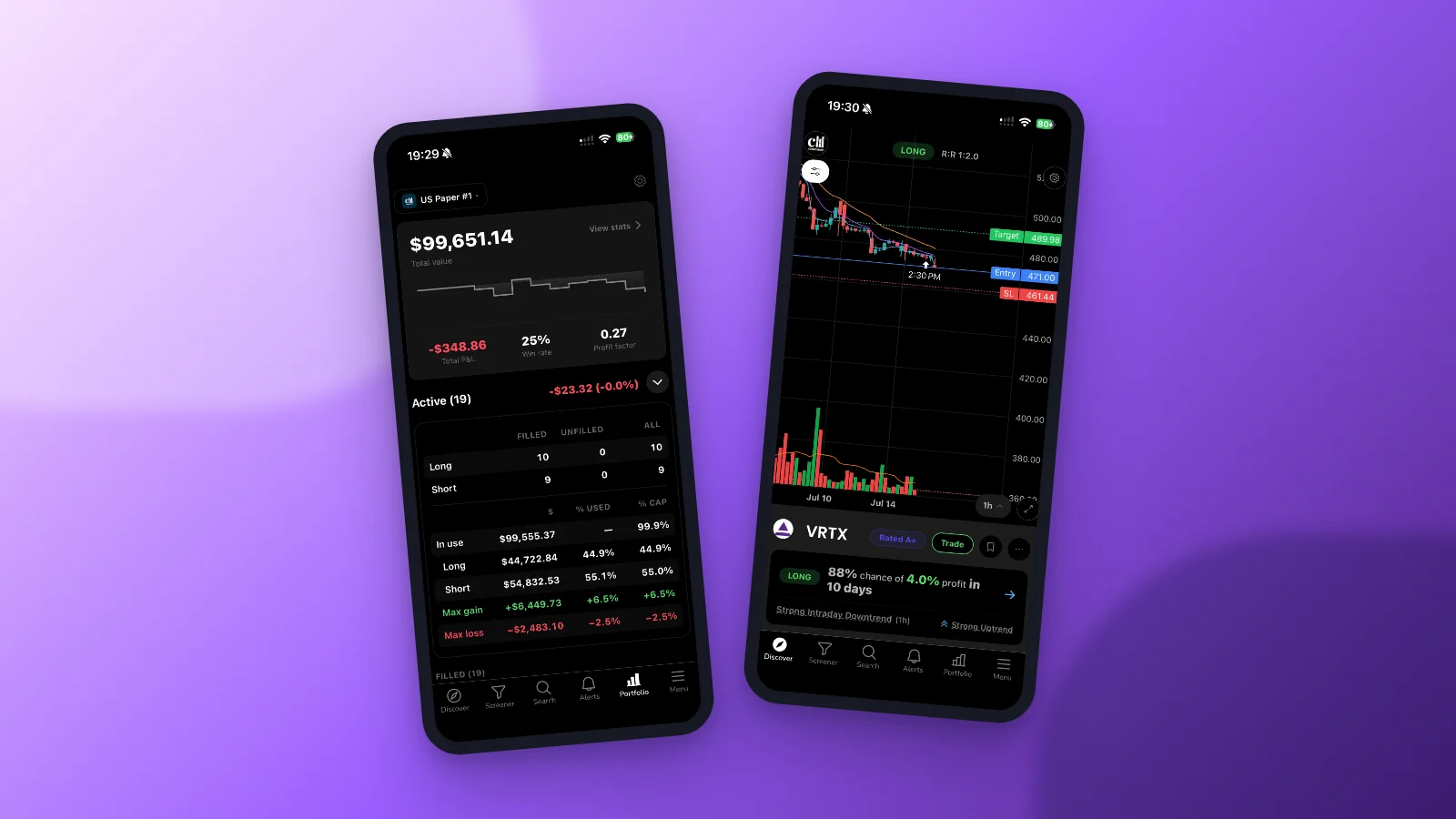
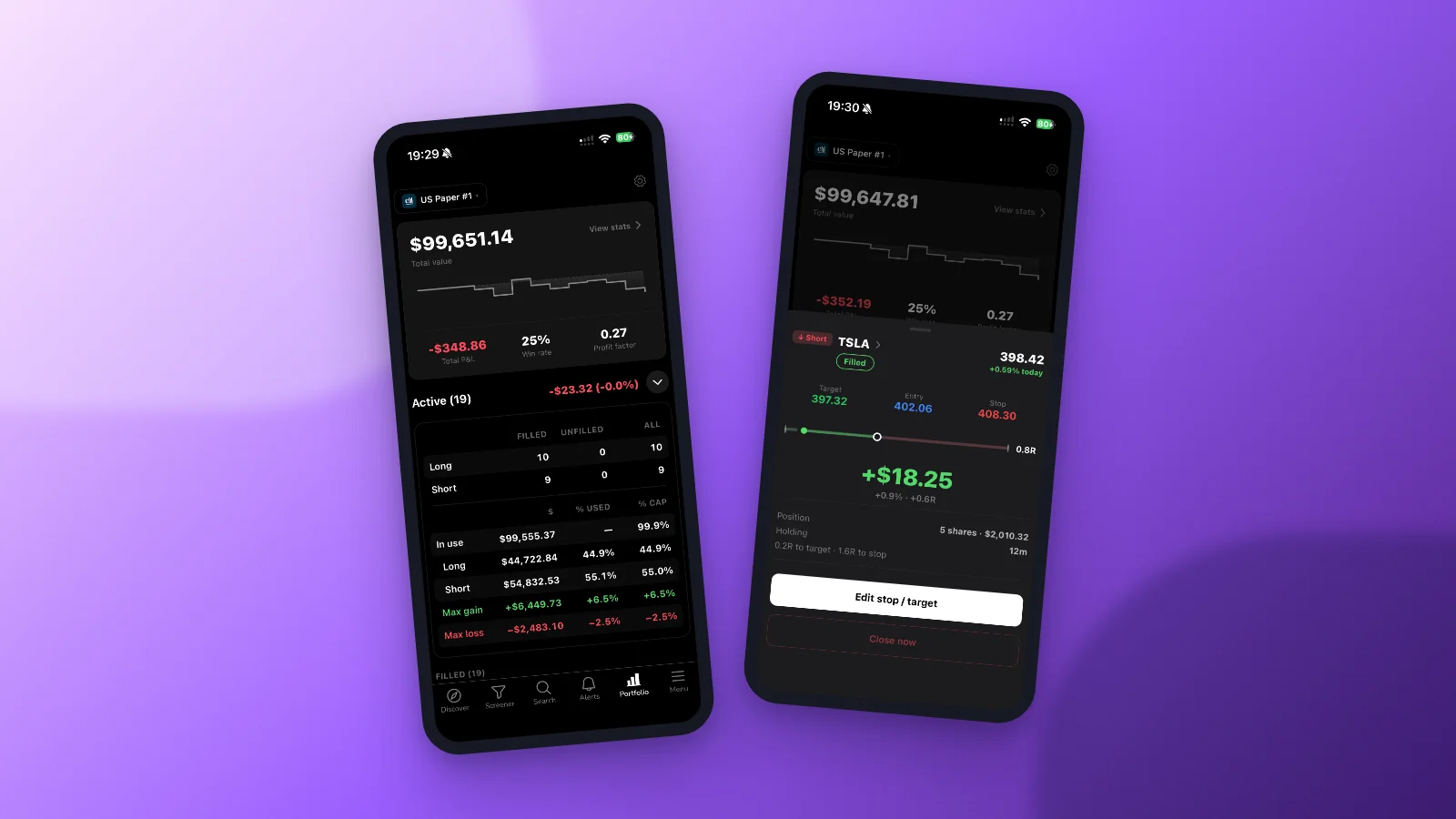
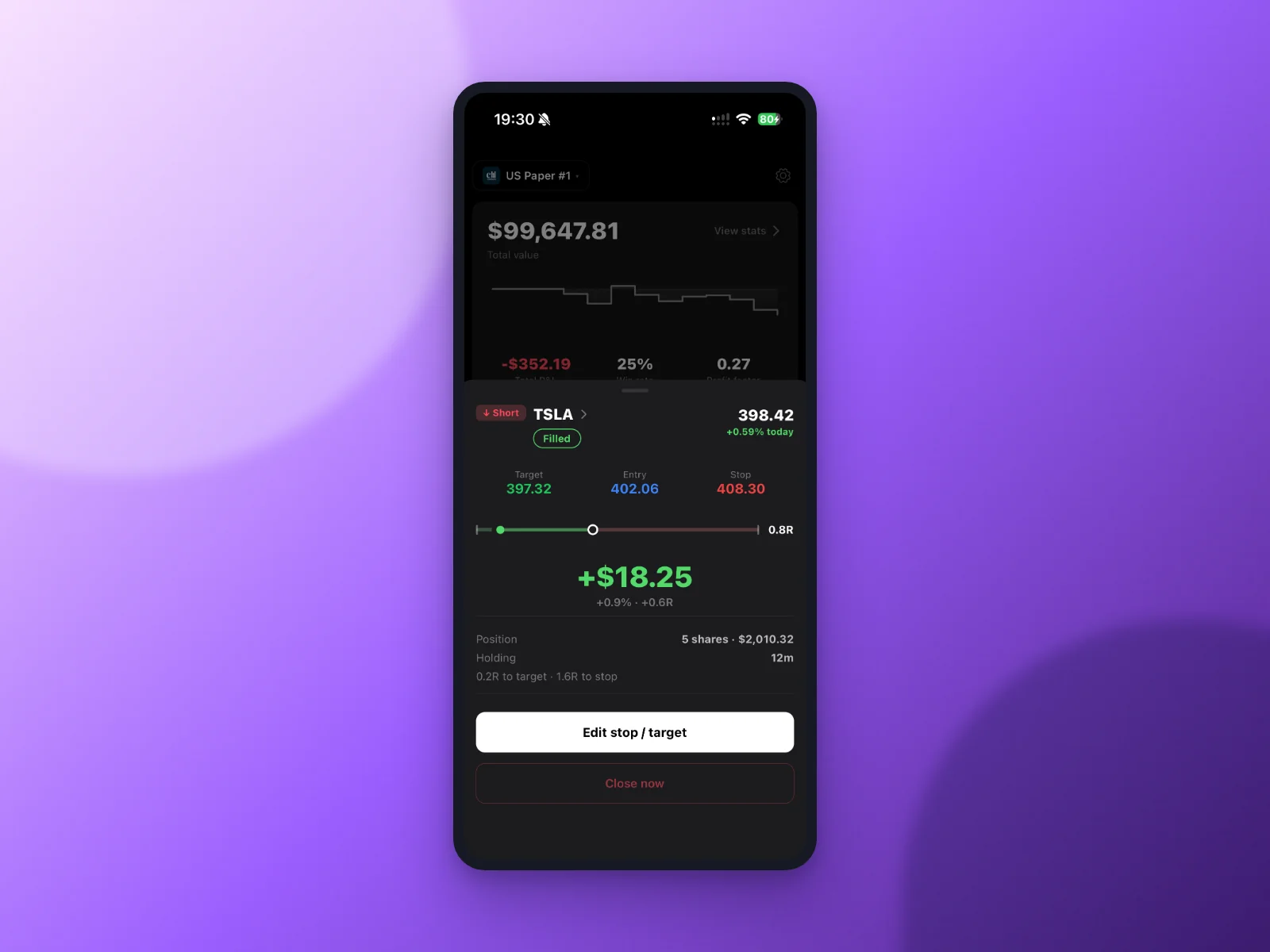
This is also where the tooling around your practice matters. ChartMath's paper trading pre-fills entry, stop, and target from backtested screens instead of leaving those numbers to a guess in the moment. It computes position size from the account risk percentage you choose, so every simulated trade is sized the way a live trade would be. And it tracks batch stats across your simulated trades, including whether stops were actually held rather than moved or ignored, which is the detail most sim tools never surface and most traders never track on their own.
That structure is what makes sim results mean something. Without it, a batch of paper trades is just a diary of good intentions. With it, you get a real answer to the question that matters: does this setup, traded the way you'd actually trade it live, hold up over enough reps to trust with real capital?
If you want to see the screens and workflow behind that process, the web-based screener shows the 200+ backtested setups available to test against, each with its own historical win rate and average return. You can also watch a quick demo of how a setup moves from screen to alert to a properly sized, stop-defined trade.
FAQ: Paper Trading Mistakes and How to Avoid Them
How long should you paper trade before going live?
There's no universal number of days, and calendar time is the wrong measure anyway. What matters is the number of trades on one specific setup with your process followed correctly every time, entry, stop, size, and logging. A batch of 20 to 30 trades on a single setup, with the rule applied consistently, gives you a far more honest read than "I sim traded for a month."
Does paper trading actually prepare you for real money?
It can, but only if the simulation mirrors your live process exactly. Sizing correctly, setting stops before entry, and logging every trade in the sim is what transfers useful habits. Skipping those steps because "it's not real" trains the opposite of what you want, and that gap shows up the moment real capital is on the line.
What's the biggest difference between sim and live trading?
The psychological weight of a real loss. No amount of simulation fully replicates the discomfort of watching real capital drop. That's exactly why the process, not the emotion, needs to be identical between sim and live. If your rules, sizing, and stops are consistent, the emotional gap shrinks because your decisions are already automatic.
Should beginners paper trade every setup or just one?
One setup at a time. Testing five setups at once in a sim spreads your sample size too thin to learn anything about any of them. Pick one rule-based setup, run a real batch of trades against it, review the results, and only then consider adding a second. This mirrors how how to trade stocks without watching screen all day recommends building a workflow around a small number of validated setups rather than chasing every pattern that looks interesting.
Paper trading isn't the problem. Doing it like it doesn't count is. If you're ready to run your simulation the way you'd actually trade live, with entries and stops pulled from backtested screens instead of guesswork, download the ChartMath app and start a batch on one setup this week. Track it properly, review it in seven days, and you'll have a real answer instead of a hopeful guess about whether you're ready to trade with real money.
To run the simulation the way you'd trade live, you can paper trade backtested setups: simulated money at live market prices, stop and position size fixed before entry, and batch stats that include whether every stop was actually held.

See these setups live in ChartMath
200+ curated screens with backtest data. Free. No credit card required.