Is Paper Trading Useless? Only the Way Most People Do It
A trader opens a paper trading account on Monday morning. By Friday, she's up 14%. She's found it, the edge, the system, the thing that finally works. She funds a live account the following week with real money and loses half of it in eleven trading days. If you've read the "paper trading builds false confidence" takes online, you already know this story. It's the reason a lot of experienced traders will tell you, flatly, that paper trading is a waste of time.
They're not wrong about what happened to her. They're wrong about the conclusion. The question worth asking isn't whether paper trading works in general. It's does paper trading actually work when it's built the way most people never bother to build it: with a fixed rule, a real position size, a stop that gets honored, and a result that gets recorded whether it's good or bad. That version of paper trading survives the criticism. The version most people run does not.
The Case Against Paper Trading, Made Honestly
Before defending paper trading, it deserves a fair hearing from the other side. The skeptics have three arguments, and all three are backed by how simulated trading actually behaves.
First, false confidence from small samples. A trader runs ten sim trades, wins seven, and concludes the strategy works. Seven wins out of ten tells you almost nothing about a real edge. Early luck reads as skill because the brain is wired to find patterns in noise, especially when the pattern flatters us. A strategy with a genuine 55% win rate can post seven wins in ten trades fairly often just by chance.
Second, there's no emotional weight. Nothing is actually at risk in a simulator. You don't feel the stomach-drop of watching a real position move against you, and you don't feel the pull to move your stop "just this once" because your rent isn't riding on the outcome. Fear and greed are the two forces that break trading plans in live markets, and a simulator, by design, can't produce either one. That's not a flaw you can patch. It's a structural limit of any paper account.
Third, unrealistic fills. Most simulators fill your order at the exact price you clicked, instantly, with no slippage and no partial fills. Real markets don't work that way. A fast-moving breakout can slip half a point between the alert and the fill. A thin stock can leave you holding a partial position when liquidity dries up. Sim fills are consistently kinder than real fills, which means sim results are consistently better than what a trader should expect to see live.
All three of these are real. None of them are exaggerated. If your paper trading setup has fantasy sizing, no stop discipline, and instant perfect fills, the skeptics are describing your exact experience, and they're right to call it a waste of time.
Where the Criticism Actually Points
Here's the part the skeptics usually skip: none of those three problems are caused by simulation itself. They're caused by the absence of rules. A trader who paper trades with no fixed entry criteria, no defined stop, and no position sizing formula isn't testing a strategy. She's playing a video game with trading-themed graphics.
Think about what "undisciplined paper trading" actually looks like in practice. The trader picks a stock because it "looks good." She buys a fantasy-sized position, sometimes the equivalent of her entire account on one ticker, because there's no real capital on the line to make that feel reckless. If the trade goes against her, she doesn't have a stop loss defined, so she waits, because waiting doesn't cost anything in a simulator. She doesn't write any of it down. By Friday she remembers the two trades that worked and forgets the four that didn't.
That's not a test of a trading strategy. That's the same gut-driven, undisciplined behavior that wrecks live accounts, just running in a sandbox with no downside yet. The tool isn't broken. The process running on top of it is. And here's the uncomfortable part: a trader who paper trades this way and then goes live usually keeps trading exactly the same way, because the sim never forced her to build different habits. She just built confidence in bad ones.
What Paper Trading Can Actually Prove (and What It Can't)
The honest fix isn't to throw out paper trading. It's to be precise about what it can and can't validate. Paper trading is a rule-following test. Live trading is an emotional-execution test. Confusing the two is where most of the "it's useless" complaints actually come from.
| What Paper Trading CAN Validate | What Only Live Trading CAN Validate |
|---|---|
| Whether you follow a defined, backtested rule consistently across many occurrences | Whether you follow that same rule when real money is on the line |
| Whether your position sizing math is correct and repeatable | Whether you actually use that sizing when fear or greed shows up |
| Whether you set a stop before entry, every time | Whether you honor that stop when the trade is moving against real capital |
| Whether your process produces a batch of results that match a strategy's backtested win rate and average return | Real slippage, partial fills, and broker-level friction on execution |
| Whether you can review a sample size honestly instead of reacting to a hot or cold streak | How you behave after a real losing streak with real dollars gone |
Read that table again and notice the pattern. Everything paper trading can prove is about process. Everything only live trading can prove is about emotion under real financial stakes. A trader who understands this distinction stops expecting paper trading to answer a question it was never built to answer, and starts using it for the thing it's actually good at: proving you can follow your own rules before you find out whether you can follow them under pressure.
If you want a deeper look at separating a setup's real historical edge from a lucky streak, how to validate a swing trade setup before you risk capital walks through the same sample-size logic in more depth.
1. Trade a Backtested Rule, Not a Vibe
The first fix is the most important one. A simulated trade only counts as a real test if it comes from a rule you defined before you saw the outcome, not a chart that "looked good" in the moment. "I liked the setup" is not a rule. It can't be repeated, it can't be measured, and it can't be reviewed honestly, because the definition of success quietly shifts every time you look back at it.
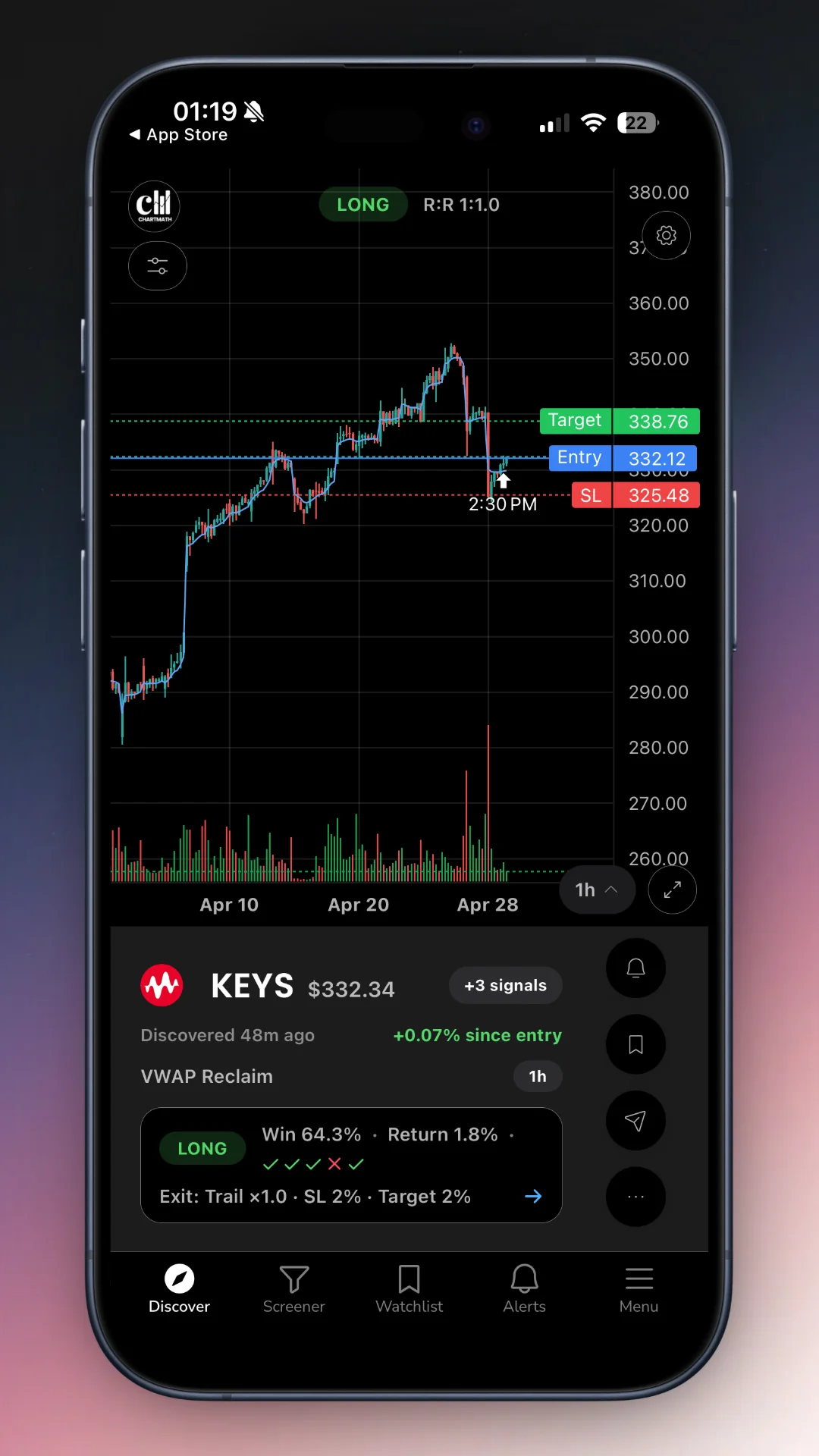
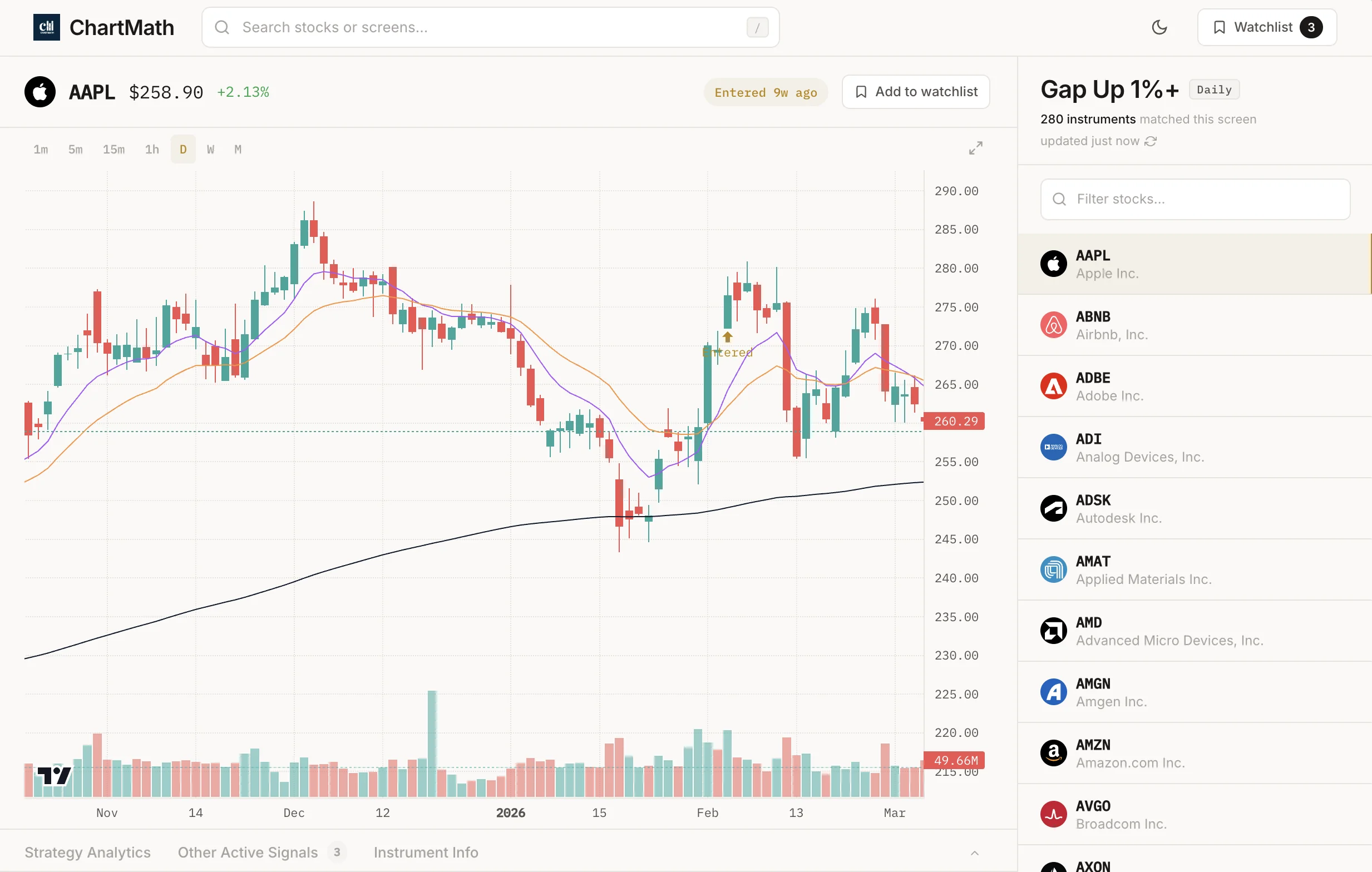
A defined rule looks different. It says: price cleared this exact level, on this exact timeframe, with this exact volume condition, at this timestamp. That's the difference between discretionary chart-reading and a rule you can actually paper trade in a way that means something. ChartMath's 200+ backtested screens exist for exactly this reason: each one is a pre-defined, historically tested entry condition across a curated universe of 500+ US equities, plus crypto pairs and futures, with its own Win Rate and Average Return attached. You're not guessing whether a setup has worked before. You already know its historical track record before you take the sim trade.
That matters for paper trading specifically because a rule you can point to is a rule you can review objectively later. If the sim trade lost, you can ask "did the setup fail, or did I not actually follow the rule," which is a very different question than "was that a bad trade," and it's the only version of that question that actually teaches you something. For more on reading a signal correctly before acting on it, see how to read a trading signal before you risk money.
2. Size the Position Like It's Real Money
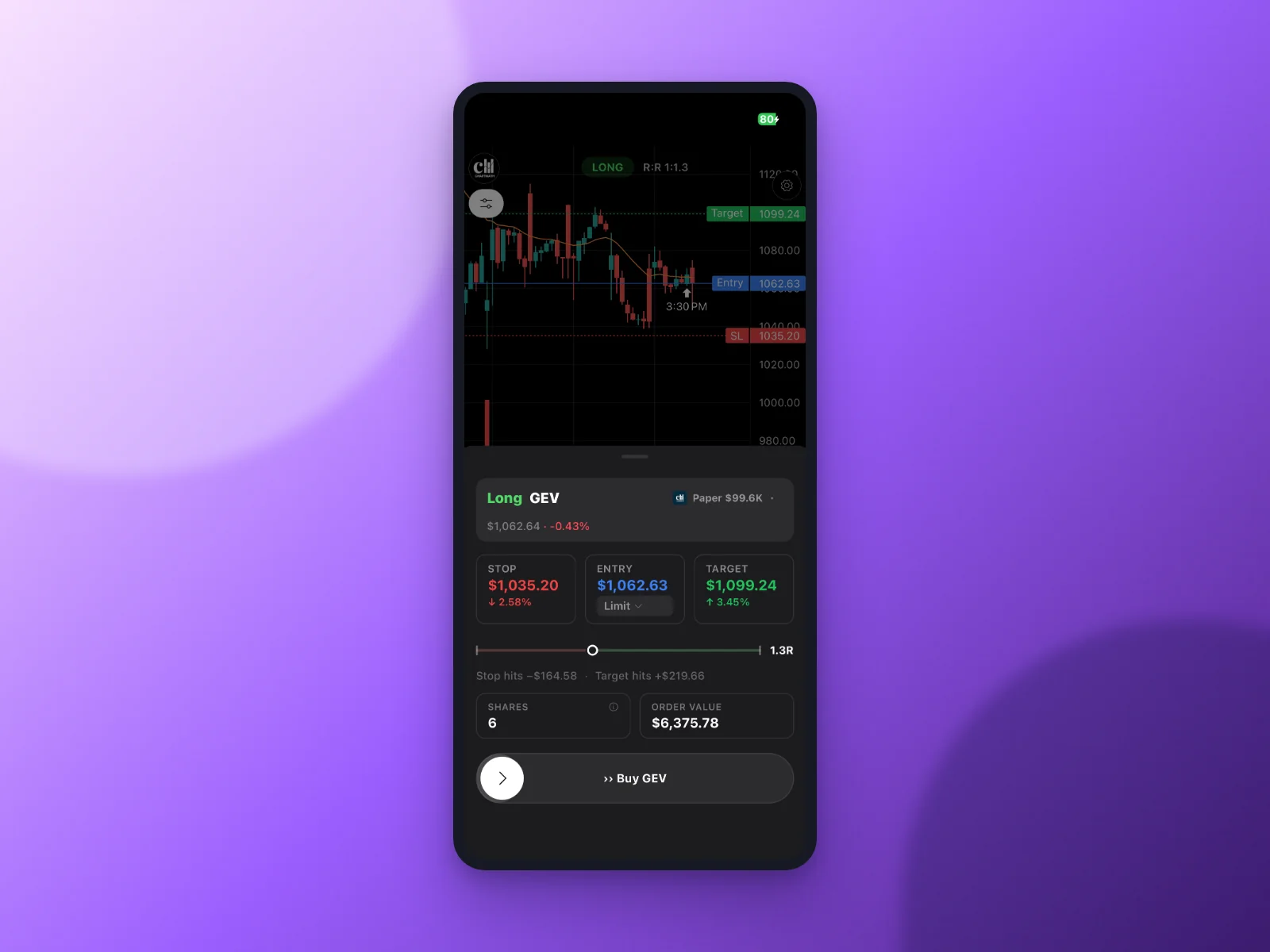
Fantasy position sizing is the single biggest tell that a paper trading account is a video game instead of a rehearsal. If every sim trade is the same round number, or worse, the entire fake account balance on one ticker, the results tell you nothing about how you'd actually behave with real capital.
The fix is simple to state and easy to skip: size every simulated position exactly the way you'd size a live one. That usually means picking a fixed account-risk percentage, commonly cited in the 1-2% per trade range, and calculating the actual share size from your stop distance, not from how confident you feel about the setup. If your account is a certain size and your stop is a certain number of cents or dollars away from entry, the math tells you the position size. It's not a feeling, it's arithmetic, and it should be the same arithmetic whether the trade is simulated or real. We cover this calculation in detail in our guide to building an efficient trading workflow.
Here's the test to apply before every sim trade: would you size it this way with your actual account balance? If the honest answer is no, you're not rehearsing a live process. You're rehearsing a habit you'll have to unlearn later, and unlearning a habit is much harder than never forming it.
3. Honor the Stop on Every Single Trade
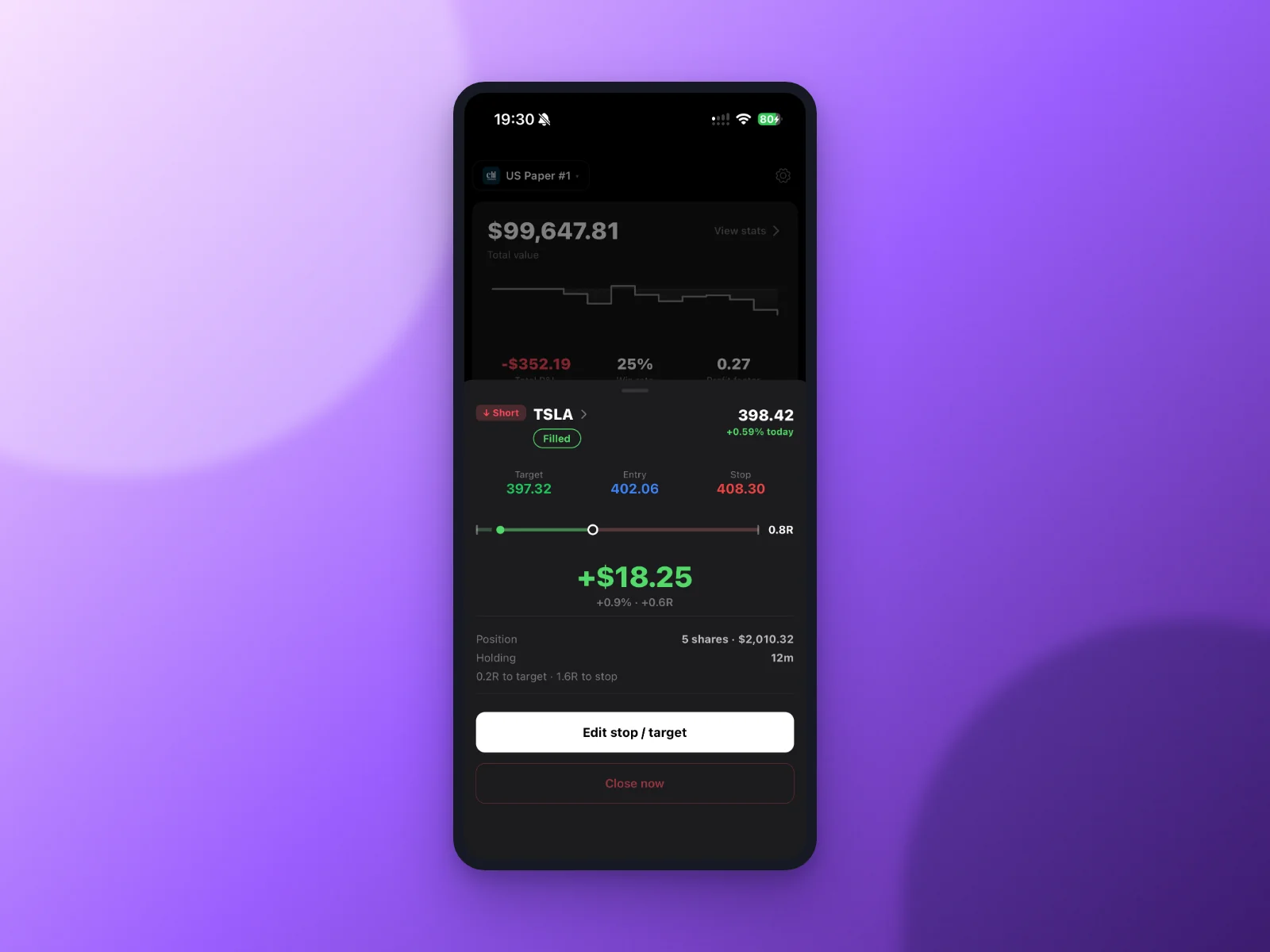
This is where paper trading quietly falls apart for most people, and it's the easiest failure to miss because it doesn't feel like cheating. A sim trade moves against you. There's no real money on the line, so waiting costs nothing. You tell yourself you'll "give it a bit more room," and the position that should have been closed at your stop stays open until it either recovers or gets much worse.
That habit doesn't disappear when you switch to live trading. It gets worse, because now there's real fear layered on top of the same impulse to avoid taking the loss. A stop that isn't honored in a simulator will not be honored with real money either. Paper trading, done this way, actively trains the exact behavior that blows up live accounts.
The rule is uncomfortable but non-negotiable: set the stop at the moment of entry, before you know how the trade plays out, and treat it as fixed. The test isn't whether the trade wins. The test is whether you executed your own plan without renegotiating it mid-trade. That's a rule-following test, and it's exactly the kind of thing paper trading is built to measure, as long as you don't cheat on it.
4. Record Every Result and Review by Sample Size, Not a Hot Streak
Every simulated trade needs a record: entry price, exit price, stop level, position size, and the specific rule that triggered it. Not the trades you remember. All of them, including the ones you'd rather forget.
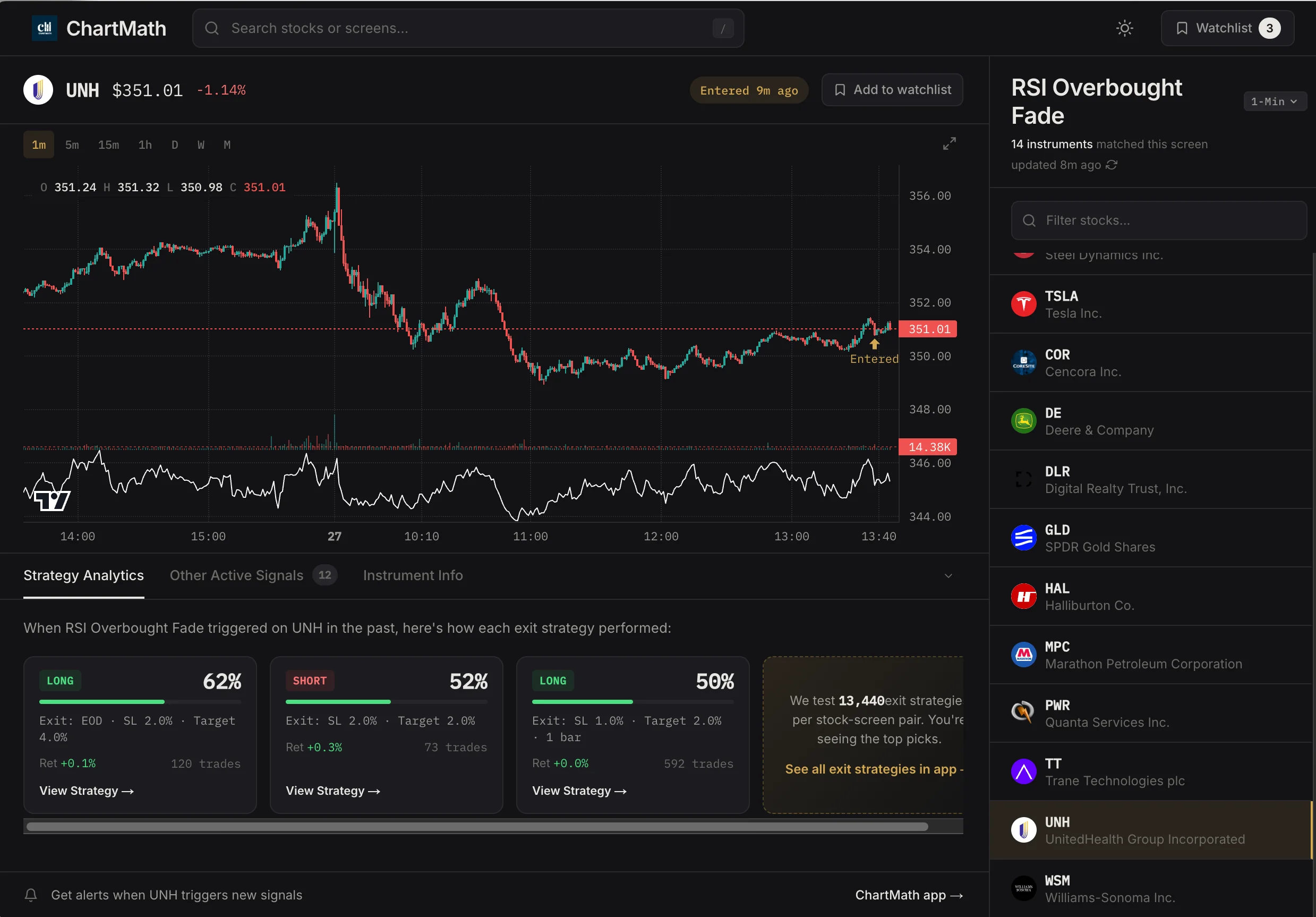
The bigger discipline is judging the batch on sample size, not on a streak. Five winning trades in a row feels like proof. It isn't. A strategy needs enough occurrences, often dozens, before its real win rate and average return start to resemble what the backtest actually showed. Reviewing after three good trades or three bad ones is how the trader in our opening story convinced herself she'd found an edge in four days. She hadn't. She'd found a coin flip that happened to land the same way a few times in a row.
Build this into a routine instead of a one-off check. Our weekly trading review guide lays out a 20-minute process for going through a batch of trades methodically, and how to build winning backtesting strategies covers how large a sample needs to be before you can trust what it's telling you. The goal of this step isn't to feel good about your week. It's to find out, honestly, whether you're following your own rules consistently enough for the data to mean anything.
The Honest Transition Path: Clean Sim Batch to Small Live Size
Most traders make one of two mistakes. They paper trade forever, gaining confidence in a process that has never faced real fear, or they jump straight to full live size the moment a paper trading week looks good, which is exactly the mistake that cost our opening trader half her account.
The path between those two extremes is the one that actually works. Graduate out of paper trading based on rule-following consistency across a real sample size, not based on a winning streak. If you've recorded a meaningful batch of sim trades, followed your entry rule every time, sized every position correctly, and honored every stop, that's the signal you're ready. A hot week is not that signal.
When you do go live, go small on purpose. Trade a fraction of your normal size for the first batch of real trades. This isn't about the strategy anymore, you already tested that in the sim. It's about testing something a simulator structurally cannot: whether you can execute the same rules when your own money is genuinely at risk. That's the piece paper trading can't touch, and it's why skipping this small-size bridge is the most common way traders re-learn the same lesson twice, once in the sim and once, expensively, for real.
This bridge is also where a lot of traders discover the gap between what they thought they'd do and what they actually do under pressure. That gap is real information. It's just information that only live trading, at real financial stakes, can produce. For a broader look at building the surrounding habits, including how systematic screening fits before and after this transition, see swing trading with a full-time job: a real system.
FAQ: Common Questions About Whether Paper Trading Works
Does paper trading actually work for beginners?
It works for beginners specifically as a rule-following exercise, not as a profit forecast. A beginner who paper trades a defined, backtested setup, sizes positions correctly, and honors stops is building a real, transferable skill: consistent process execution. A beginner who paper trades without any of those constraints is just building false confidence.
How long should you paper trade before going live?
There's no universal day count. What matters is sample size and consistency, not a calendar. You want enough recorded sim trades, following one defined rule, to see whether your batch results track the strategy's known historical win rate and average return, and whether you followed your own entry, sizing, and stop rules every time without exception.
Why do paper trading results not match live results?
Two reasons, and both are structural rather than a sign that paper trading is worthless. Fills are usually kinder in a simulator, with no slippage or partial fills. And there's no real fear or greed acting on your decisions, so discipline that held in the sim can crack under real financial stakes. That gap is exactly why the transition should start at small live size instead of full size.
Is paper trading a waste of time for experienced traders?
Not if it's used correctly. Experienced traders often use a disciplined paper trading process to test a new setup, a new market, or a modified rule set before committing real capital to it, the same logic covered in how to build an efficient trading workflow. It becomes a waste of time only when it's run without fixed rules, real sizing, and honest record-keeping, the same failure mode that makes it useless for beginners.
The skeptics are right about the failure mode. Undisciplined paper trading, fantasy sizing, ignored stops, no record, is a video game, and it will teach you nothing you can trust. But the fix isn't to abandon the tool. It's to run it the way you'd run a real account: a backtested rule instead of a vibe, a position size calculated from real risk, a stop honored without exception, and a batch reviewed by sample size instead of a hot streak.
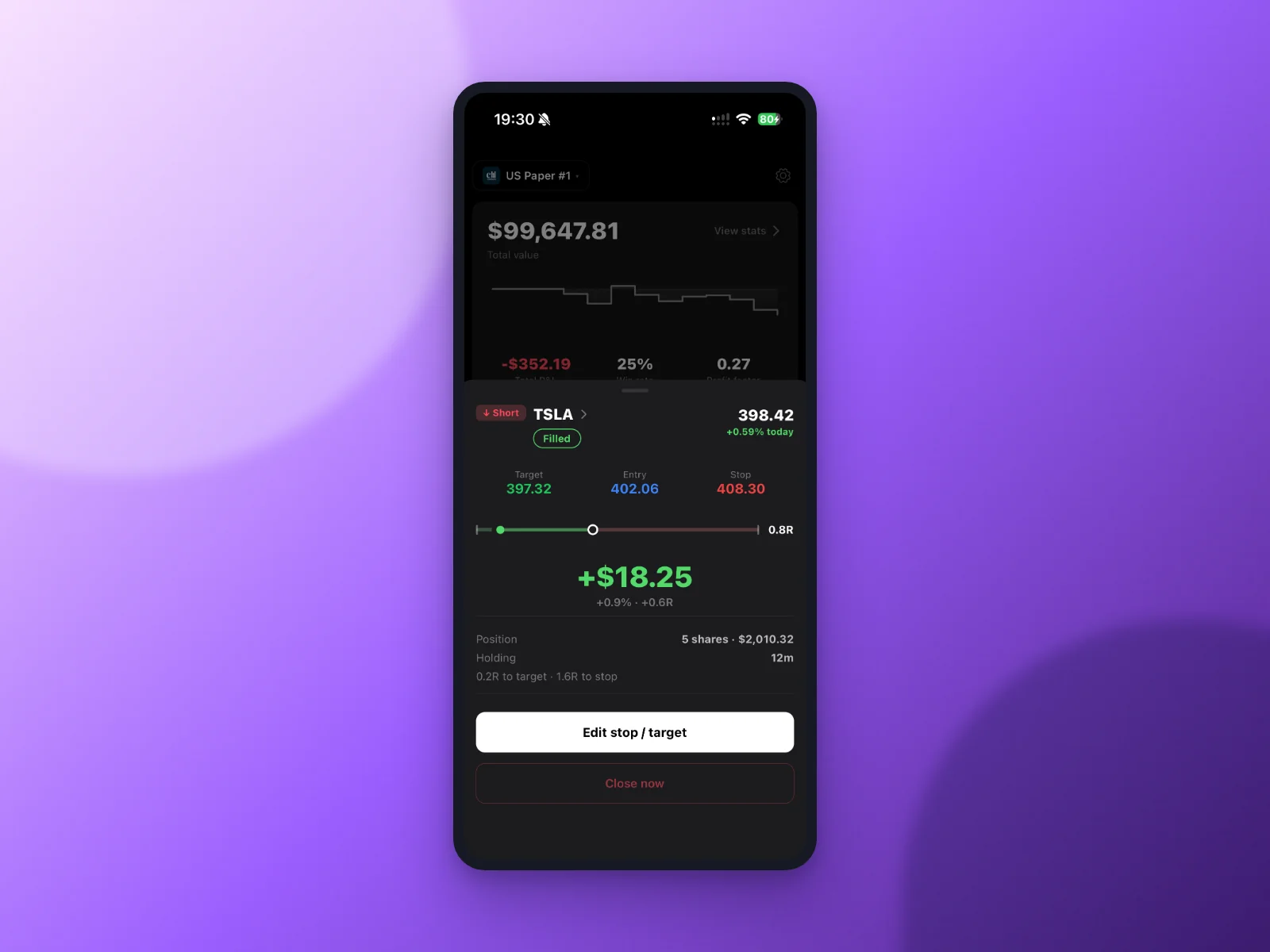
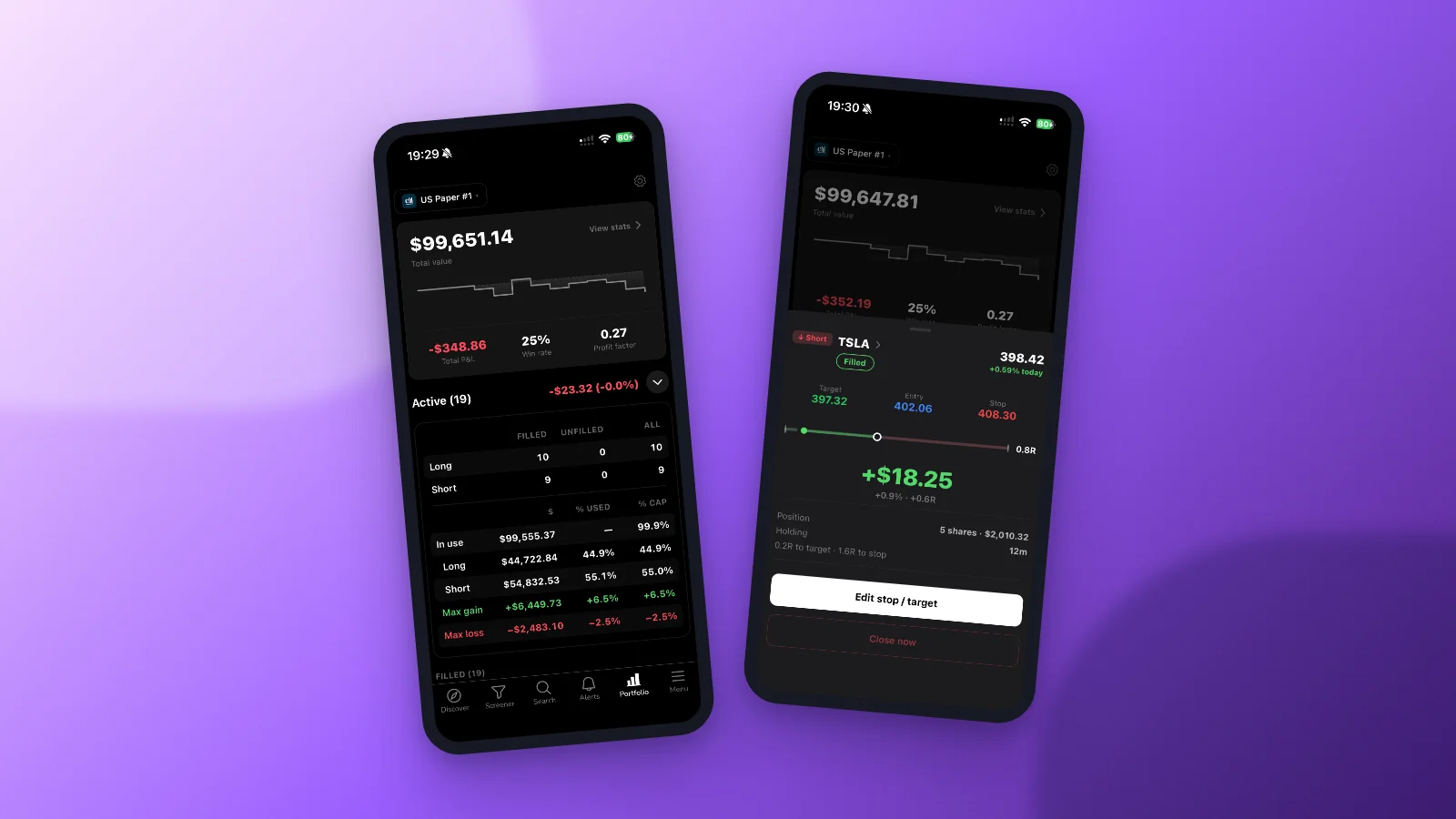
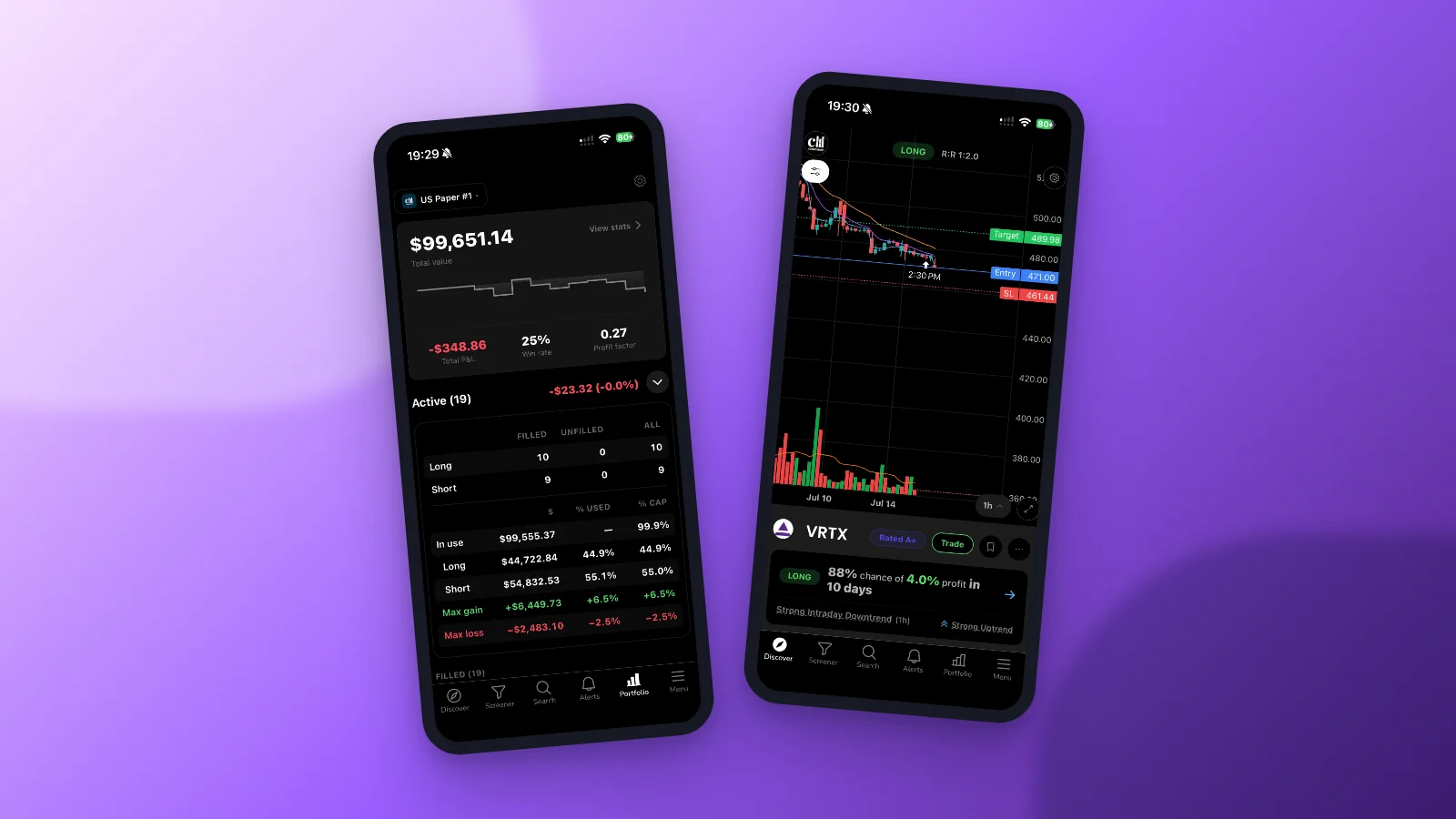
ChartMath's paper trading, at chartmath.com/paper-trading, is built around that exact discipline. It runs simulated trades on the same backtested screens you'd use live, at live prices, with the stop and size pre-filled from the rule itself rather than left to a guess. Every batch gets tracked with stops-held stats, so you can see, honestly, whether you followed your own plan before you ever risk real capital. If you've been asking whether paper trading actually works, the answer is in the process, not the tool. Download the app to run your next batch of sim trades on a defined, backtested rule, or explore the web-based screener to see the setups behind them first. You can also watch a demo to see the discipline built into the process before you start your first batch.

See these setups live in ChartMath
200+ curated screens with backtest data. Free. No credit card required.