Weekly Paper Trading Routine for Busy Traders
Most traders quit paper trading before it ever teaches them anything. Not because paper trading is a bad idea, but because they run it wrong. They open a simulator, place a few random trades when they feel like it, get bored after a week, and either abandon the whole exercise or jump into live trading with the same undisciplined habits they never fixed.
That is not a paper trading problem. That is a structure problem. Paper trading only works when it runs on a schedule tight enough to build a habit and long enough to produce a real sample. This guide lays out the exact weekly loop swing traders with a full-time job use to turn a simulator into a proving ground, in under 30 minutes a day. If you are searching for the best paper trading app for stocks, the app matters less than the routine you run inside it. Here is that routine.
Why Endless Paper Trading Sandboxes Don't Build Skill
An open-ended paper trading account is a sandbox with no walls. You can place a trade any time, size it however you want, and close it whenever you feel like it. That flexibility feels useful, but it is exactly what makes most paper trading accounts useless. Without a fixed process, you are not testing a system. You are just clicking buttons and calling it practice.
Here is the deeper issue: a sandbox with no rules produces no feedback loop. If you don't fix your entry criteria, your position size, and your exit rules before you place a trade, you can't tell afterward whether a win was skill or luck. You end up with a pile of trades that all feel meaningful but teach you nothing, because none of them followed the same rule twice.
The fix is not more discipline in the abstract. It's a bounded weekly loop: a fixed time to scan, a fixed time to check, and a fixed time to review. That structure is what turns paper trading from busywork into a real rehearsal for how you'll trade with actual capital. It also happens to fit around a 9-to-5 job, because every step has a hard time limit.
If you want the deeper case for why sandbox-style practice fails and structured, evidence-based habits win, our how to stop trading on gut and start using data piece walks through exactly what replaces gut feel in a systematic routine.
The Weekly Paper Trading Routine, Day by Day
The routine has four touchpoints. Each one takes a few minutes, except the Sunday scan, which takes closer to 20 to 30. Nothing here requires you to watch a chart during the workday.
- Sunday: Scan backtested screens, read the track record, shortlist 2-3 setups for the week.
- Weekday mornings: A quick premarket check. If a shortlisted setup fired, place the simulated trade with entry, stop, and target pre-filled.
- Midday: Nothing. You don't check charts unless an alert fires.
- Next Sunday: Review the whole batch of trades together, not one at a time.
Total weekly time: roughly two hours, most of it on Sunday. That's the entire point. You're not trying to trade more. You're trying to trade the same handful of validated setups, consistently, so the results actually mean something by the time you're ready to risk real money.
1. Sunday: Scan and Shortlist Before the Week Starts
Sunday is planning day, not trading day. Markets are closed, which means there's no pressure to act, only to prepare. Start by scanning backtested screens across a curated universe of 500+ US equities. You're not trying to look at every stock in the market. You're looking at a bounded, well-defined set of names run through pre-built technical screens with a documented history.
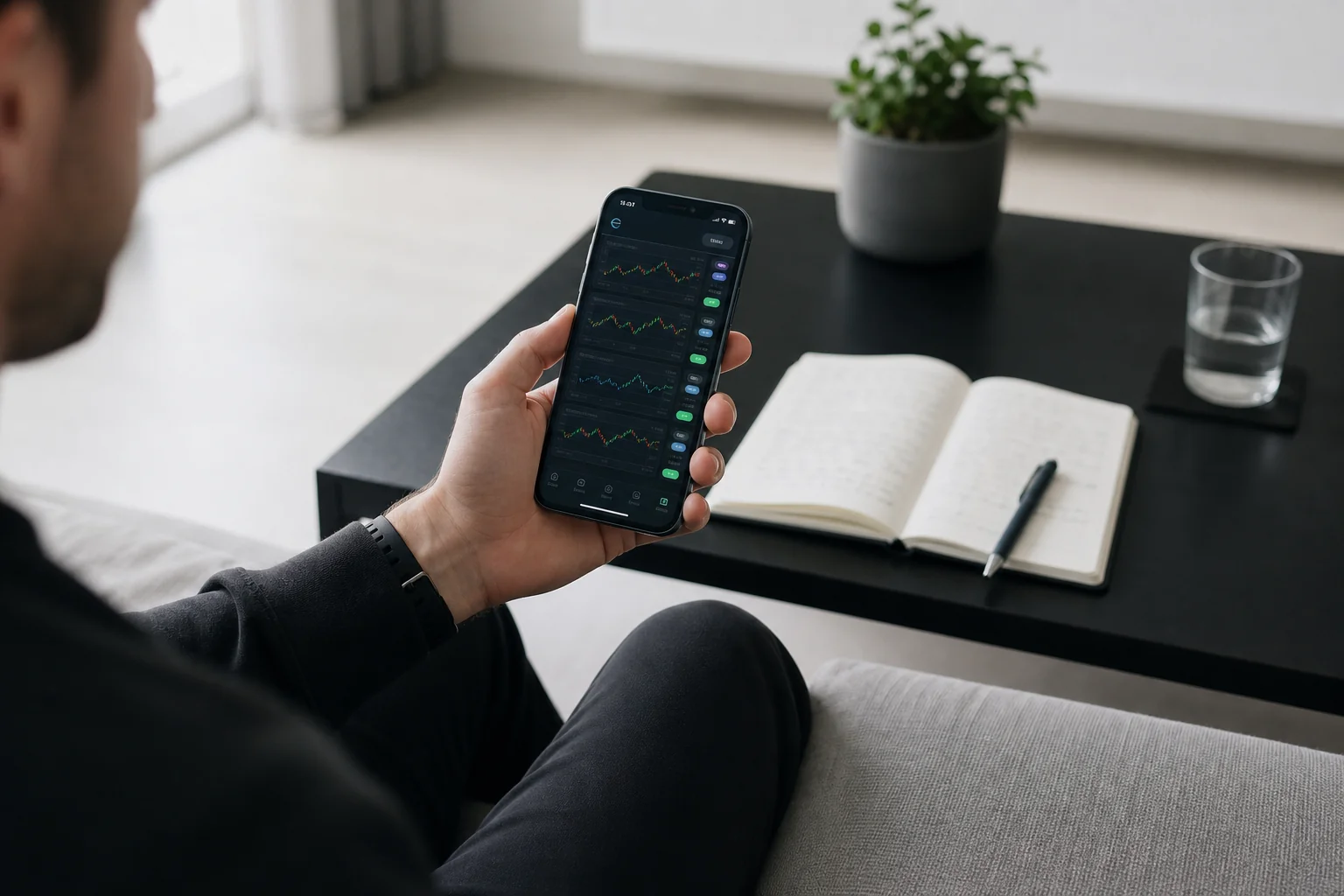
The habit that matters most here is simple: read the actual track record before you shortlist anything. Every screen worth using shows a win rate and an average return over its historical matches. Don't skim past these numbers. Open the screen, look at how many times it's fired historically, and decide whether that sample is big enough to trust. A setup that fired eight times isn't a track record. A setup that fired 150-plus times, with a documented win rate and average return, is something you can actually plan around.
ChartMath's screener runs this exact check for you across 200+ curated technical screens, each with backtested win rate and average return data attached, so you're reading history instead of guessing at it. You can browse the full catalog on the web-based screener without opening the app.
Once you've reviewed the numbers, narrow your list to 2-3 setups you actually understand well enough to explain out loud. If you can't describe the exact rule, "buy when price reclaims VWAP on rising volume," for example, you're not ready to trade it. Write the rule down. Not a feeling, not a vibe, an actual if-then statement. For a deeper look at reading VWAP-based setups specifically, see our guide on VWAP trading and how to use volume-weighted average price.
This is also the moment to set your alerts for the week. If you're shortlisting a screen, subscribe to alerts on it so you get pinged the instant a match happens instead of hunting for it yourself. Our post on watchlist alerts for swing trades that fire at the right time covers how to set this up so the alert does the watching, not you.
2. Weekday Mornings: The Premarket Check
Monday through Friday, the process is short. A few minutes before or right at the open, check whether one of your shortlisted setups actually fired. Most mornings, nothing will have triggered, and that's fine. You're not looking for action. You're looking for a match against a rule you already wrote down on Sunday.
If a setup did fire, this is where the discipline actually gets tested. Pre-fill your entry, stop, and target before any emotion has a chance to creep in. Size the simulated position from a fixed account-risk percentage, the same percentage every time, not a number you adjust because you "feel good" about this one. If you're new to sizing trades this way, our piece on validating a swing trade setup before you risk capital breaks down how to check a setup's history before committing size to it, even in a simulator.

Log the trade, note the screen it came from, and close the app. Go to work. This is the step most traders get wrong, not because they skip it, but because they keep checking. The habit you're building isn't "watch the trade." It's "place the trade correctly, then walk away." If your job doesn't allow you to sit and watch a chart anyway, this step should feel natural. Our guide on trading stocks without watching the screen all day covers the mechanics of this handoff in more detail.
3. Midday: The Power of Doing Nothing
This is the step people struggle with the most, because it asks you to do nothing. No checking, no refreshing, no scrolling through charts between meetings. The silence is not a gap in the routine. It is the routine.
Constant refreshing does two things, and neither helps you. It wastes attention you need for your actual job, and it invites you to second-guess a trade you already placed with pre-filled stops and targets. Once your simulated entry, stop, and target are set, there is nothing left to decide until one of those levels gets hit. Checking early doesn't give you new information. It just gives you a chance to override your own plan out of anxiety.
The alert should come to you. That's the entire design. A push notification tells you when a stop or target has been hit, or when a new setup on your shortlist matches, so you never need to hold a chart open just in case. That single shift, from "I check the market" to "the market tells me," is what makes this routine survivable for someone working a full 8-hour day. If alert overload has ever burned you out on a different tool, our post on building an efficient trading workflow in 2026 covers how to keep notifications useful instead of noisy.
4. Next Sunday: Review the Batch, Not the Individual Trade
The following Sunday, before you scan for new setups, review last week's trades as a group. This is the step that turns a handful of paper trades into an actual dataset. Don't zoom in on your best win or your worst loss. Zoom out to the batch.
Look at three things specifically:
- Expectancy and R-multiples across the whole batch: not whether Tuesday's trade worked, but what the average result looked like once you account for wins, losses, and how much you risked on each.
- Whether stops were actually held: did you exit at the level you pre-filled, or did you move it mid-trade because the price got close? Moving a stop after the fact defeats the purpose of paper trading before risking real money.
- Which screens' live results tracked their backtested numbers: if a screen showed a strong historical win rate but your live paper results came in well below that, something about current market conditions, your entry timing, or your execution is off, and it's worth understanding before you scale up.
This weekly batch review is the single habit most likely to separate traders who improve from traders who just accumulate trades. For a structured template you can run in 20 minutes, see our guide on how to run a weekly trading review in 20 minutes.
Paper Trading Routine vs. Unstructured Practice: A Side-by-Side Look
It helps to see the weekly-loop routine next to the two most common alternatives: an open-ended sandbox with no fixed schedule, and skipping paper trading entirely to go straight to live trading. Here's how they compare across the factors that actually matter.
| Factor | Weekly-Loop Paper Trading | Open-Ended Sandbox | Straight to Live Trading |
|---|---|---|---|
| Time cost per week | ~2 hours, mostly on Sunday | Unpredictable, often more time for less structure | Constant, since real money demands constant attention |
| Feedback quality | High, batch review shows expectancy and R-multiples | Low, trades aren't consistent enough to compare | High cost of learning, mistakes cost real capital |
| Emotional discipline built | Strong, pre-filled stops and fixed risk percent remove in-the-moment decisions | Weak, no rule forces discipline | Tested immediately, often painfully |
| Risk of building bad habits | Low, rules are fixed before entry every time | High, inconsistent sizing and exits teach nothing repeatable | High, no room to test rules before they cost money |
| Readiness signal for going live | Clear, a meaningful batch with tracked expectancy | Unclear, no defined stopping point | None, you learn readiness after the fact |
The table makes the case plainly. An unstructured sandbox and jumping straight into live trading both fail the same test: neither gives you a clean way to know if your system works before it costs you money. A tight weekly loop does.
When to Transition from Paper to Small Live Size
There's no fixed calendar date for this. The signal to move on is a meaningful batch, not a number of weeks. Once your batch review shows enough trades to trust the expectancy calculation, and your live paper results are tracking reasonably close to the screens' backtested win rates, you have something worth testing with real, small size.
The most important thing to understand about this transition: you are carrying over the process, not the excitement. The rules stay exactly the same. Fixed risk percentage per trade, pre-filled stops and targets before entry, the same weekly review cadence, managing the whole book of trades rather than obsessing over any single one. The only thing that changes is that now there's real capital behind the trade instead of a simulator.
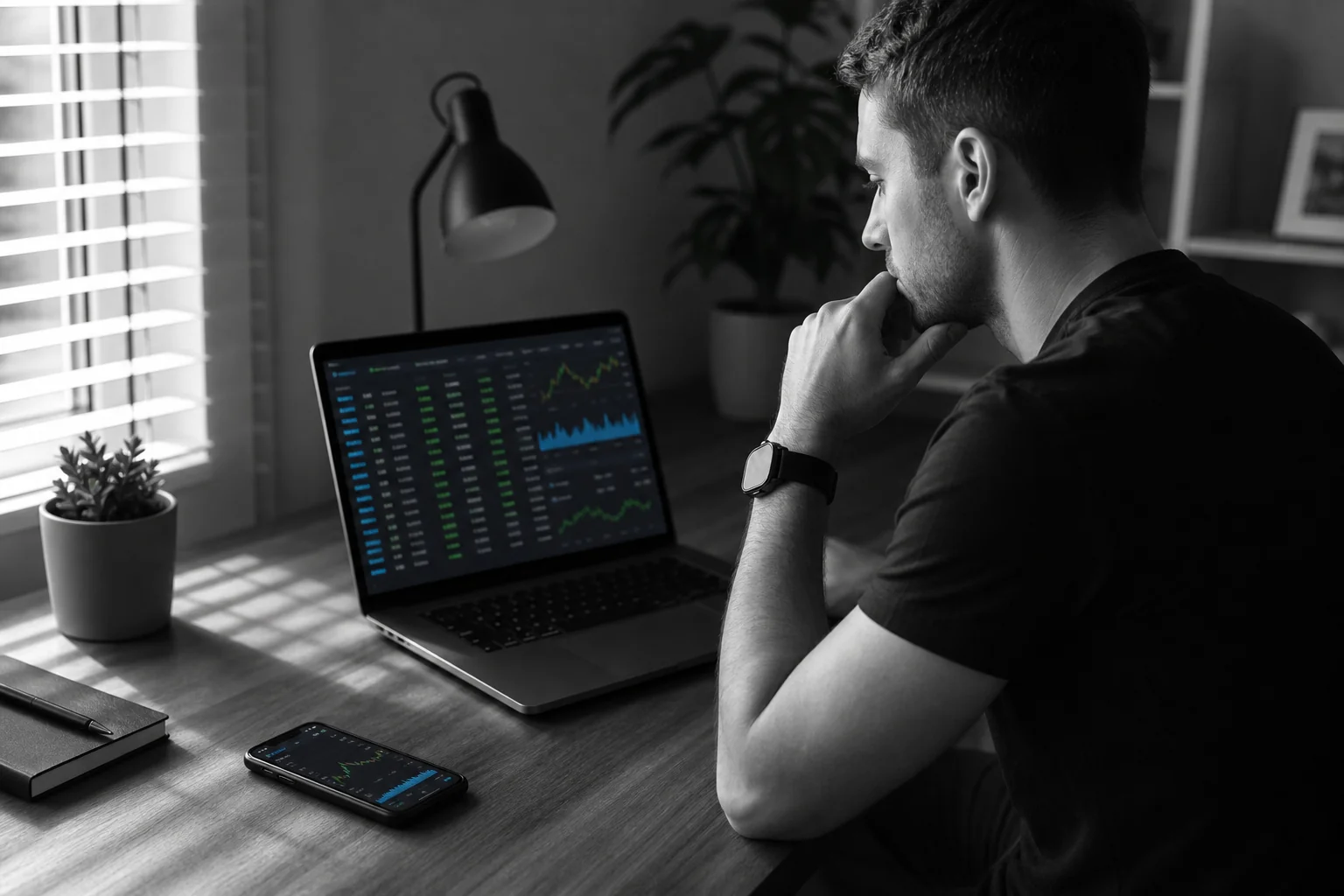
Start live trading small. Smaller than feels necessary. The point of small size isn't to protect your account from a single bad trade, though it does that too. It's to protect the routine itself from the emotional spike that real money introduces. If the process breaks the moment real dollars are on the line, that's useful information, and it's much cheaper to learn at small size than at the size you were hoping to trade. Our post on building winning backtesting strategies covers how to keep validating a setup even after you've gone live, since the review habit doesn't stop once capital is real.
Building the Habit: Evidence Before Entry, Every Time
Every piece of this routine points back to the same idea: evidence before entry, every time. You read the historical win rate and average return before you shortlist a setup. You fix your risk percentage before you place a trade. You review the batch before you decide anything meant something. None of these steps depend on how you feel in the moment, which is exactly why they work for someone who can't watch a chart all day.
This is also why the tool underneath the routine matters less than people think, and the process matters more. A trade-discovery copilot like ChartMath surfaces setups and their backtested history; it doesn't place trades for you or make the decision. You still choose which setups to shortlist, how much to risk, and when the batch is meaningful enough to act on. That's copilot, not autopilot, and it's the same posture whether you're paper trading on Sunday or managing real size six months from now.
The goal of paper trading isn't to prove you can pick winners. It's to prove you can follow a process consistently enough that winners and losers average out to something you understand.
If you're building this habit from scratch, our broader guide on swing trading with a full-time job lays out how this weekly loop fits into the rest of a part-time trading schedule, from screening to execution to review.
Frequently Asked Questions
How long should I paper trade before going live?
There's no universal number of weeks. Instead, watch for a batch large enough that your expectancy and R-multiple numbers stop swinging wildly from trade to trade. For most traders running 2-3 shortlisted setups a week, that means several weeks to a couple of months of consistent weekly reviews before the sample feels stable enough to trust.
What's the best paper trading app for stocks if I have a full-time job?
Look for one built around a fixed weekly routine rather than constant monitoring: backtested screens you can scan on your own schedule, push alerts so you don't have to watch charts during work hours, and a simple way to log and review trades in batches. ChartMath is built around exactly this workflow, with 200+ curated technical screens across a 500+ US equity universe and alerts that come to you instead of requiring you to hunt for setups. You can see the full setup at chartmath.com/paper-trading.
Should I paper trade every setup or just my shortlist?
Just your shortlist. Paper trading every setup that looks interesting produces the same problem as an unstructured sandbox: too much noise, no consistent rule to test. Two or three setups you understand well enough to explain in one sentence is enough to build a meaningful sample without overwhelming your week.
Does paper trading really translate to live trading results?
It translates the process, not the emotions. Paper trading proves you can follow entry, sizing, and exit rules consistently. It won't fully prepare you for the psychological pull of real money, which is exactly why the transition to live trading should start small. Keep the same weekly loop running after you go live so you catch any drift between paper results and live execution early.
Start Your Weekly Loop This Sunday
You don't need a better simulator. You need a schedule tight enough to build a real habit and a source of backtested setups you can actually trust before you shortlist them. That combination is what turns paper trading from a stalling tactic into genuine preparation for live capital.
Set aside 30 minutes this Sunday. Scan the screens, read the track record, write down your shortlist. Then run the loop: check premarket, let the alerts do the watching, and review the batch next Sunday. If you want a workflow built specifically for this routine, visit chartmath.com/paper-trading to see how the screens, alerts, and weekly review fit together, or download the app and start this Sunday's scan today.

See these setups live in ChartMath
200+ curated screens with backtest data. Free. No credit card required.