How to Trade Futures Contracts as a Beginner
Picture a beginner trader named Priya. She opens a futures trading app for the first time on a Sunday night, sees the E-mini S&P 500 quoted with a margin requirement a fraction of the contract's notional value, and thinks: "wait, I can control this much with that little money?" That single moment, the discovery of leverage, is where most beginners either get hooked on futures the smart way or get burned within a week. This guide is about making sure it's the former.
Learning how to trade futures contracts for beginners means understanding a few mechanics that don't exist in stock or crypto trading: standardized contracts, expiration dates, margin instead of full share price, and a trading session that barely sleeps. Once you understand those mechanics, the harder problem shows up. How do you actually find a trade, without staring at five charts for eight hours while you're supposed to be working?
We'll walk through what a futures contract is, how the 11 US futures markets differ from stocks and crypto, why gut-instinct trading fails so many beginners, and how backtested technical screens with plain-English alerts can replace the guesswork entirely.
What Is a Futures Contract, Really?
A futures contract is an agreement to buy or sell a specific asset at a set price on a future date. That's the whole idea. You're not buying a share of a company like you would with Apple or Microsoft stock. You're agreeing today on a price for something (an index, a commodity, a currency) that gets settled later.
This is different from buying a stock outright in a few important ways. When you buy a share of stock, you own a small piece of a company forever, or until you sell it. A futures contract has an expiration date built in. It's standardized: the exchange sets the contract size, the tick value, and the settlement terms, so every trader is looking at the exact same instrument. Most retail futures contracts on index products are cash-settled, meaning you never actually take delivery of barrels of oil or bars of gold. Your gain or loss is settled in cash based on the price move.
Futures were originally built for hedging. A farmer locks in a price for next season's wheat. An airline locks in a price for jet fuel. Speculators, including retail traders, showed up later to take the other side of those trades and to bet on price direction without any intention of holding the underlying asset. That's the seat you're sitting in as a retail futures trader: speculating on price movement, using leverage, over a defined contract window.
Futures vs. Stocks vs. Crypto: What Actually Changes When You Trade Them
If you've already traded stocks or crypto, some of the futures learning curve is really just a vocabulary problem. But three things genuinely change the way you have to think about risk: leverage, session hours, and expiration.
Leverage and margin are the biggest shift. Futures contracts let you control a large notional position with a much smaller margin deposit. That cuts both ways. It can amplify gains, but it just as easily amplifies losses, and a beginner who sizes a futures position the way they'd size a stock position can end up with far more risk than they intended.
Session hours are the second shift. US equities mostly trade during standard market hours, with limited premarket and after-hours activity. Major US futures trade nearly around the clock on weekdays. That means a position can move significantly overnight while you're asleep, something that rarely happens with a stock you're holding.
Expiration is the third. Stocks don't expire. Crypto pairs don't expire. Futures contracts do, on a fixed quarterly or monthly cycle depending on the product, which means your position has a built-in shelf life you need to track.
| Attribute | US Equities | Crypto | US Futures |
|---|---|---|---|
| Ownership | You own a share of the company | You own the coin or token | You hold a contract, not an asset |
| Trading hours | Primarily 9:30am-4pm ET, limited pre/post | 24/7, every day | Nearly 24 hours, weekdays (per exchange schedule) |
| Leverage | Limited, broker-dependent margin | Varies widely by platform | Built into contract margin requirements |
| Expiration | None, hold indefinitely | None, hold indefinitely | Fixed expiration per contract cycle |
| Typical use case | Long-term investing, swing trading | Speculation, swing and day trading | Day trading, short-term swing speculation |
None of this means futures are automatically "riskier" than stocks or crypto in every scenario. It means the risk shows up differently, and a beginner needs a plan for margin, overnight exposure, and expiration before placing a first trade. This is a topic we go deeper on in how to scan futures for day trading setups, which focuses on the intraday side specifically.
The US Futures Contracts Beginners Should Know
Beginners don't need to learn every futures product that exists. You need to know a manageable set well, and build familiarity with how they typically behave. ChartMath scans 11 US futures alongside a curated universe of 500+ US equities and 100 crypto pairs, across 7 timeframes from 1-minute up through monthly. That's a deliberately bounded universe, not "the entire futures market," because a curated set of liquid, well-understood contracts is exactly what a beginner should be trading anyway.
Broadly, the US futures universe splits into a few families you'll want to get comfortable with:
- Equity index futures, which track the major US stock indexes and tend to be the most liquid, most beginner-friendly futures products because their behavior often mirrors stocks you already follow.
- Energy futures, which track products like crude oil, and react heavily to inventory data and geopolitical headlines.
- Metals futures, which track gold and similar commodities, often moving on macro data like interest rate expectations and inflation reports.
If you're brand new, start with equity index futures. They're the most liquid, the most heavily discussed in financial media, and their price action often correlates with the stock movements you're already used to watching. Energy and metals contracts can move sharply on news events that have nothing to do with technical setups, which makes them harder to trade systematically until you've got some reps under your belt.
Why Gut-Instinct Futures Trading Fails Beginners
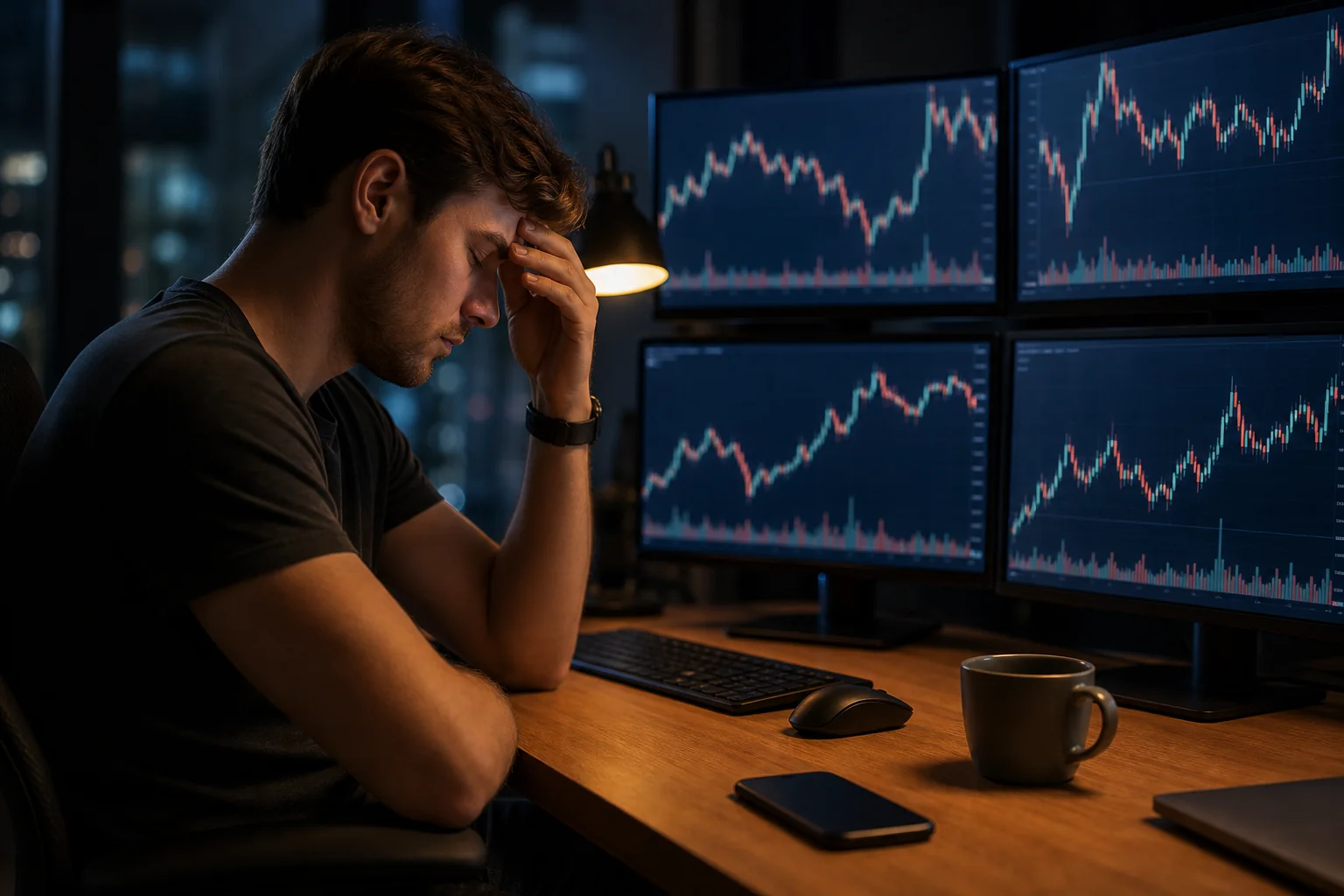
Here's the pattern that trips up almost every new futures trader. They open a chart, see a move already in progress, feel a rush of FOMO, and click into a position without a plan. The trade works about half the time, which is just enough intermittent reinforcement to keep the habit going. Eventually a string of losses shows up, and the trader has no idea whether the strategy was ever any good, because there was never really a strategy. Just a feeling.
Futures make this worse than stocks in a specific way: the market barely closes. A position you're comfortable with at 4pm can gap hard overnight on a headline, and you wake up to a very different account balance. If your only method of finding trades is watching a chart, you physically cannot watch it enough hours to catch every move, and you definitely can't watch it while holding down a day job. That's the same core problem we cover in how to trade stocks with a day job, except futures compress the timeline further because the session almost never stops.
Then there's the noise problem. A lot of beginners try to solve the "I can't watch charts all day" issue by joining a Discord or Telegram signal group. The calls come fast, some of them work, and the group posts the winners in a highlight reel. What you rarely see is the full track record: every call, not just the good ones. That's alert fatigue in its purest form, a flood of unvalidated pings with no backtest, no win rate, and no way to know if the person calling the trade has any real edge.
The core issue isn't a lack of information. It's a lack of validated information delivered at the moment it actually matters.
Replacing Guesswork with Backtested Technical Screens
This is where a systematic approach changes the equation. Instead of staring at a chart hoping to spot a setup, or trusting a stranger's call in a group chat, you can use a scanner that runs backtested technical screens continuously and tells you the moment a real setup forms, along with its historical track record.
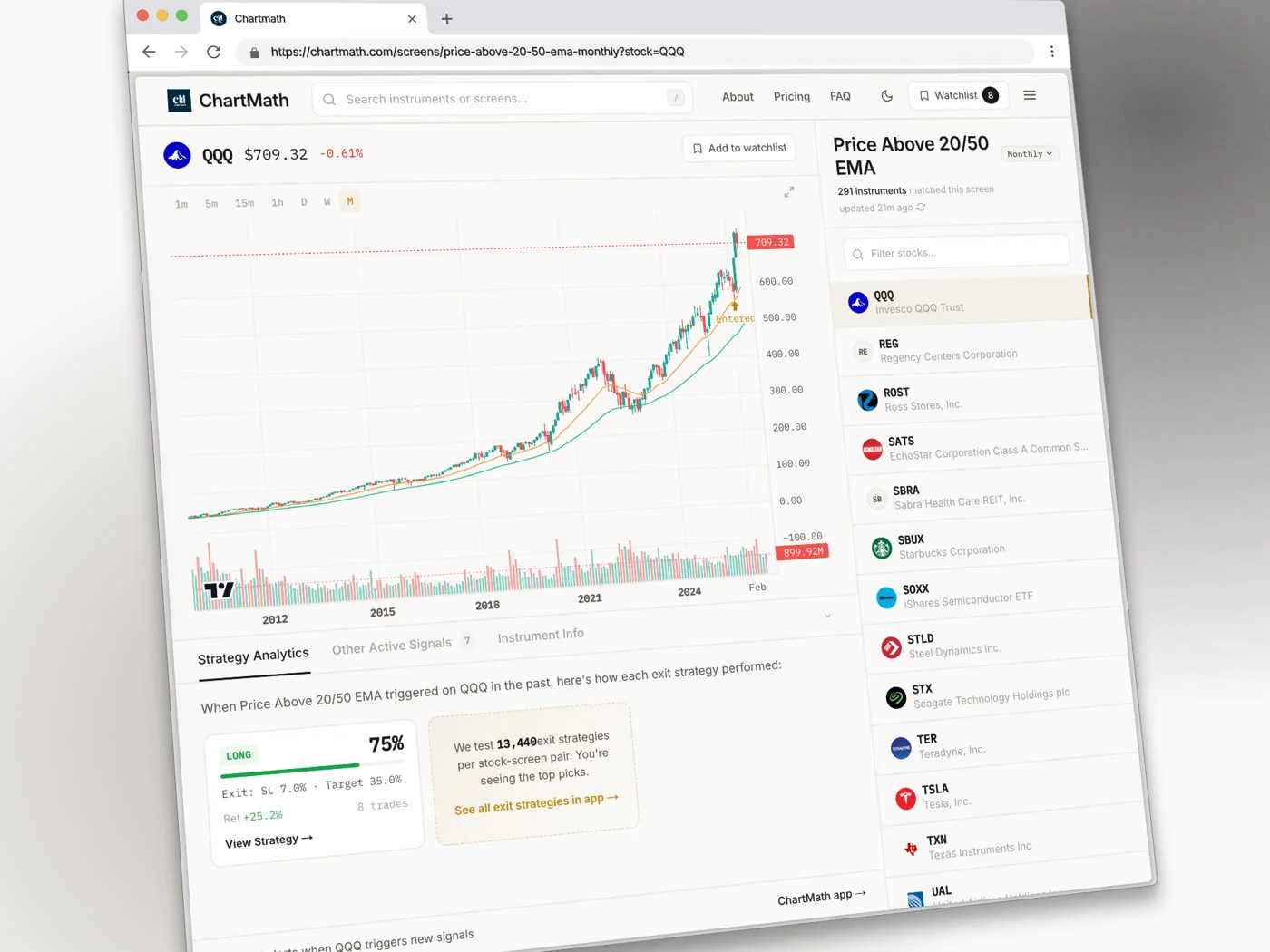
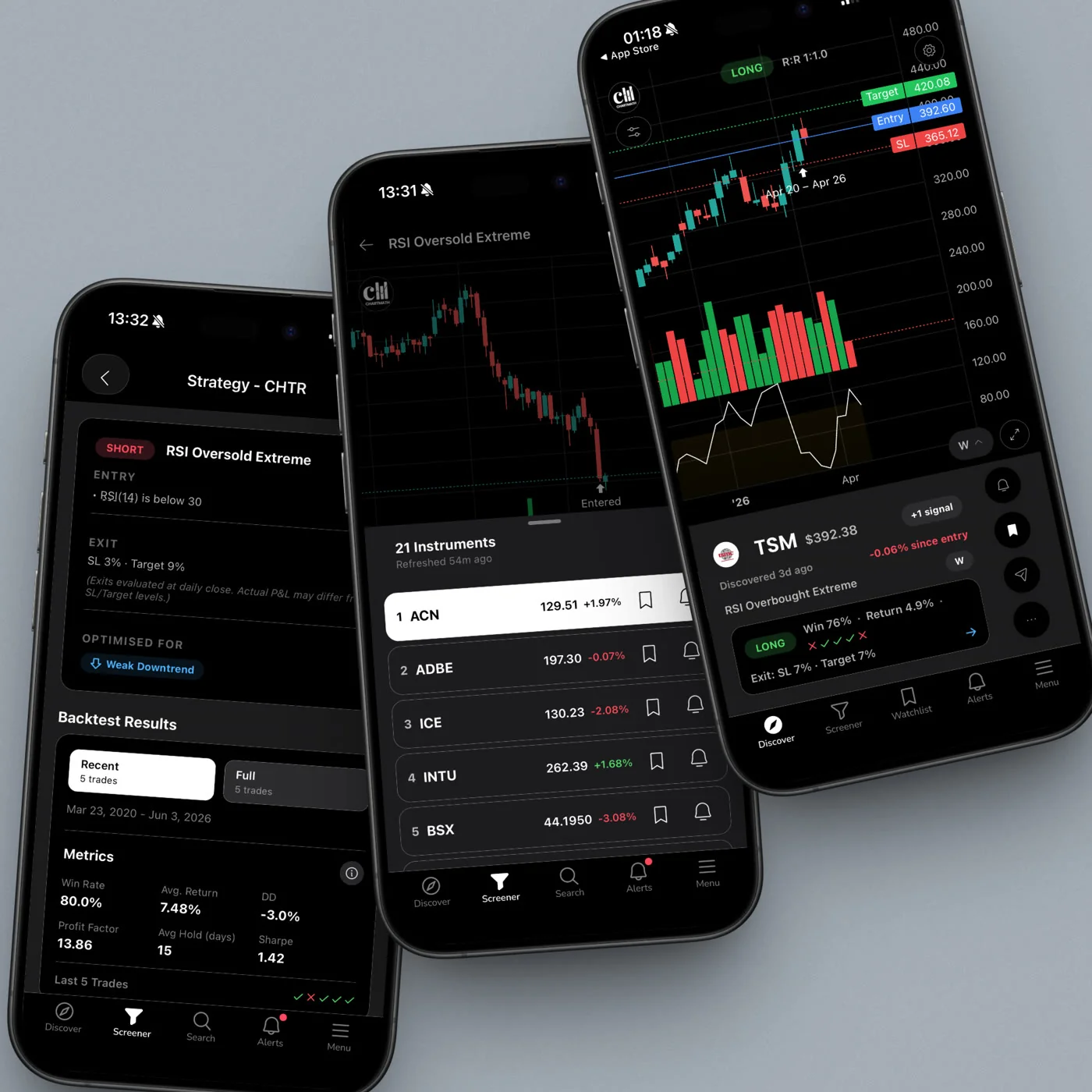
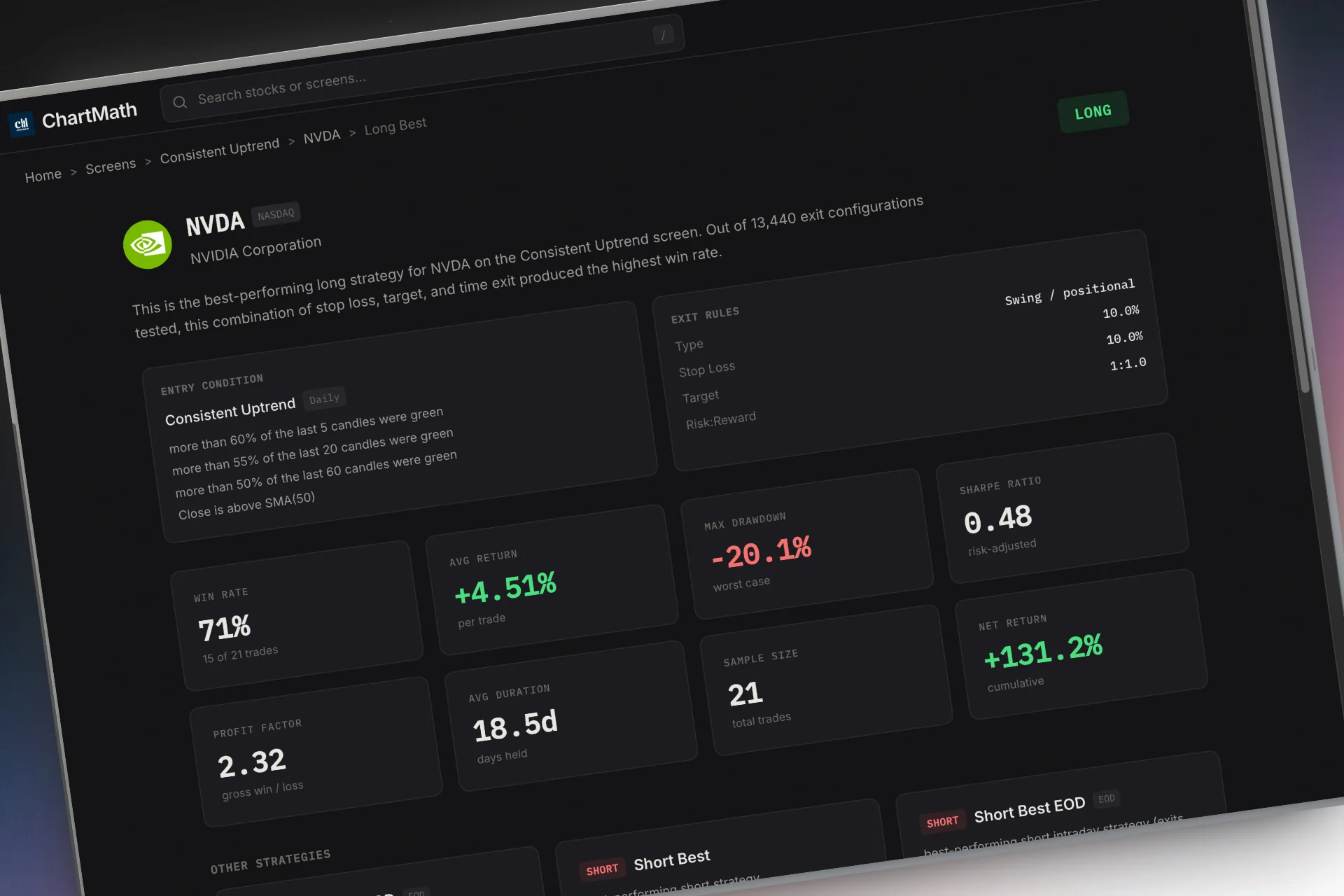
ChartMath runs 200+ curated, read-only technical screens across its universe of US equities, crypto, and the 11 US futures contracts, on 7 timeframes ranging from 1-minute charts up to monthly. Every screen carries two key numbers: Win Rate and Avg. Return, based on historical bar-close data. Notice that's not "accuracy," it's a documented historical Win Rate and Average Return you can actually inspect before you risk a dollar. That distinction matters. A vague sense that "this setup usually works" is not the same as seeing the actual sample size and the actual historical result behind it.
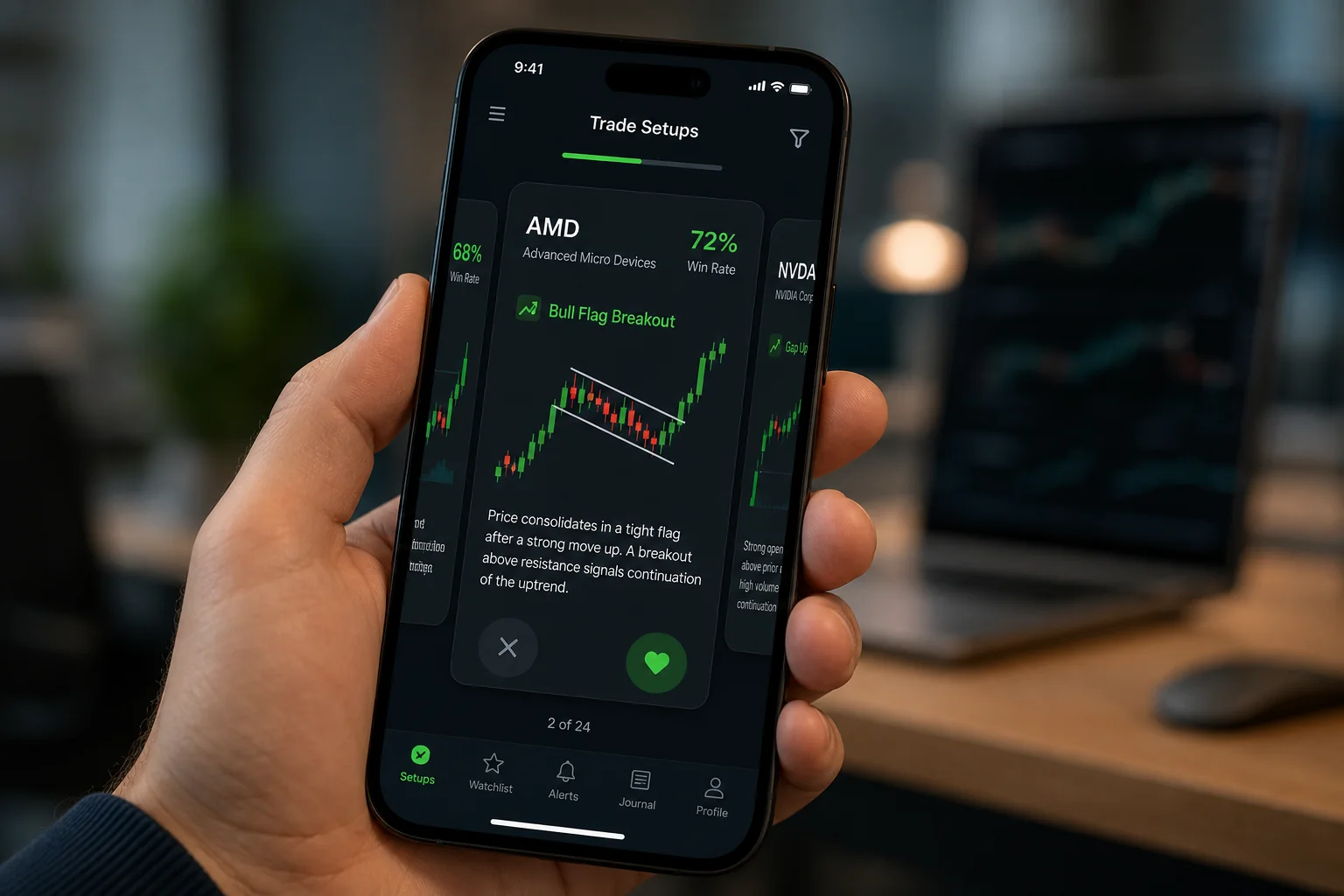
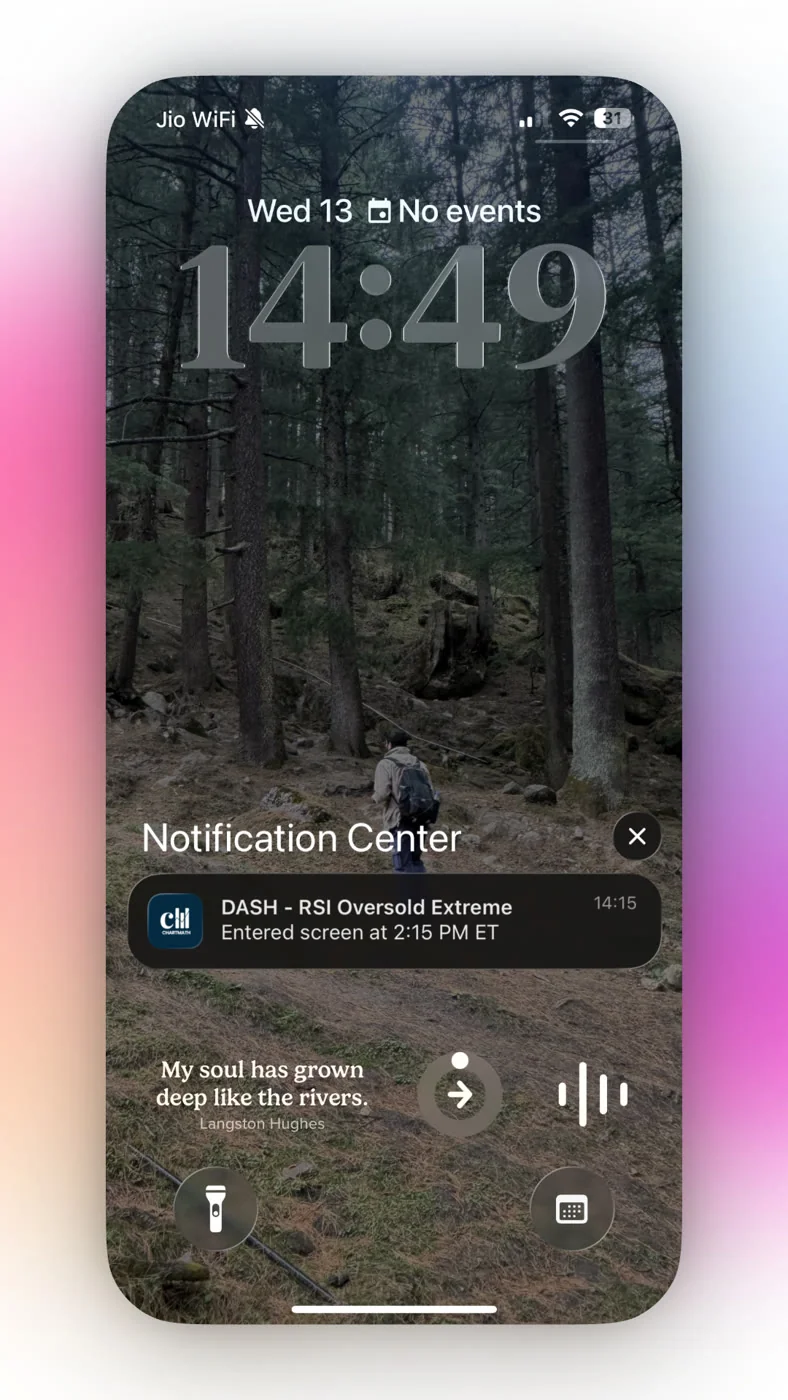
When a futures contract matches one of these screens, say a VWAP reclaim on a 15-minute chart, or a gap setup on the daily, ChartMath sends a push and email alert with a plain-English explanation of why the setup fired. Not a cryptic ticker code and a target price. An actual explanation you can read in ten seconds between meetings. You can review the historical Win Rate and Avg. Return for that exact screen before you decide whether the setup is worth acting on, the same validation process we walk through in how to validate a swing trade setup before you risk capital.
It's worth being clear about what this replaces and what it doesn't. ChartMath is a copilot, not autopilot. It never enters a trade on its own. The screen surfaces the setup with the stop and target already worked out, and you tap to place every order yourself. What changes is the discovery step: instead of scanning charts by hand or waiting on a Discord ping, the screen finds the setup for you and hands you the historical evidence to make the call. No Pine Script, no coding required to set any of this up, which matters if you're a beginner who doesn't want to learn a scripting language before you can even find a trade.
If you want to see how a screen actually looks before setting anything up, open a live screen page like the opening range breakout screen (5m) and read its rule and backtested record without installing anything. Those pages run the US equity universe; for futures contracts, switch to them inside the app.
Building Your First Beginner Futures Workflow
Knowing the mechanics of a futures contract is step one. Actually trading with a repeatable process is step two, and it's the step most beginners skip. Here's a workflow built for someone who is new to futures and doesn't have all day to babysit a chart.
Step 1: Pick Two or Three Index Futures to Follow Closely
Don't try to trade all 11 futures contracts in your first month. Pick the two or three index futures you understand best, the ones that move similarly to stocks you already watch, and build familiarity with their typical daily range and session behavior before branching out.
Step 2: Set Up a Watchlist and Subscribe to Screen-Enter Alerts
Add your chosen futures contracts to a watchlist, and subscribe to alerts on the screens you actually understand, such as a VWAP reclaim or a moving average crossover. When one of your contracts enters that screen, you get a push notification instead of needing to watch the chart tick by tick.
Step 3: Read the Win Rate and Average Return Before You Act, Not After
This is the step gut-instinct traders skip entirely. Before entering a trade off an alert, look at the historical Win Rate and Avg. Return for that specific screen. If the sample size is thin or the numbers don't support the setup, that's useful information too, and it's the difference between an evidence-based decision and a guess.
Step 4: Practice Position Sizing Before You Scale Up
Futures margin can make a position feel "cheap" to enter, which is exactly how beginners end up oversized. Decide your risk per trade as a percentage of account equity first, then size the contract quantity to match that risk, not the other way around.
Step 5: Run a Weekly Review of What Fired and What You Took
At the end of each week, look back at which alerts fired, which ones you acted on, and which ones you skipped. This is how you build a real track record of your own decision-making, not just the screen's backtested history. We cover this exact process in how to run a weekly trading review in 20 minutes.
Common Beginner Mistakes in Futures Trading
A few mistakes show up again and again with new futures traders, and most of them are avoidable once you know to watch for them.
- Oversizing because contracts feel cheap. Margin lets you control a large position for a small deposit. That's not the same as the position being small risk. Size based on account risk percentage, not on how "affordable" the margin looks.
- Trading every alert without validating it first. An alert tells you a setup matched. It doesn't tell you the setup is guaranteed to work. Check the historical Win Rate and Avg. Return before acting, every time.
- Ignoring overnight and session risk. Because major US futures trade nearly around the clock, positions can gap significantly outside your normal watching hours. Know your exposure before you go to sleep holding a position.
- Confusing a high win rate with a guarantee. No screen, no backtest, and no scanner can promise a specific outcome on a specific trade. A strong historical win rate describes past performance on a defined sample. It is not a promise about your next trade.
If you've been trading stocks manually and want to see how a scanner-based approach compares to the chart-refreshing habit most beginners fall into, how to trade stocks without watching screen all day walks through the same shift for equities.
Frequently Asked Questions About Futures Trading for Beginners
Do I need a lot of capital to start trading futures?
Futures margin requirements are typically lower than the full notional value of the contract, which is part of why they attract beginners. That said, lower margin means higher relative leverage, so the real question isn't "how much money do I need to open a position," it's "how much can I afford to lose while sizing responsibly." Talk to your broker about specific margin requirements for the contracts you're considering.
Is futures trading riskier than stocks?
Futures carry leverage and overnight/session risk that most stock positions don't. That makes the risk profile different, not simply "worse." A well-sized futures trade with a defined stop can be more controlled than an oversized, unplanned stock trade. Risk comes down to position sizing and process, not just the asset class.
Can I trade futures with a full-time job?
Yes, and this is exactly the gap that alert-based scanning closes. Instead of watching a futures chart for hours, you can set up screen-enter alerts on the specific setups you understand and get a push notification the moment a contract matches. You still need to check the alert and make the trading decision yourself, but you're not glued to a screen to catch the entry.
What's the difference between day trading and swing trading futures?
Day trading futures means entering and exiting within the same session, often using the 1-minute, 5-minute, or 15-minute timeframes. Swing trading futures means holding a position across multiple sessions, typically using hourly, daily, or weekly charts. Both approaches can use the same backtested screen framework; the difference is mainly which timeframe and holding period fit your schedule and risk tolerance.
Start Trading Futures With Evidence, Not Guesswork
Futures trading rewards discipline and punishes improvisation faster than almost any other asset class, because leverage and near-24-hour sessions leave very little room for a plan built on gut feel. The traders who stick with it long-term are usually the ones who replaced "I think this looks good" with "here's the historical Win Rate and Average Return for this exact setup."
If you're ready to stop refreshing charts and start seeing backtested futures setups the moment they form, download ChartMath and set up your first watchlist across the 11 US futures contracts it scans alongside 500+ US equities and 100 crypto pairs. It's free, no credit card required, with every screen, every backtest, and every alert included. Explore the efficient trading workflow guide next to see how the pieces fit together into a routine you can actually sustain around a full-time job.
Recommended Resources
- Watch Demo
- Web Based Screener

See these setups live in ChartMath
200+ curated screens with backtest data. Free. No credit card required.